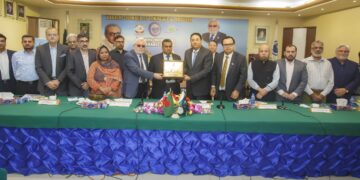


ISLAMABAD (December 11, 2025) Shahid Rashid Butt, a prominent business leader and former President of the Islamabad Chamber of Commerce, has criticised the government’s economic policies, such as taxation and energy pricing, stating that the policy of achieving financial stability by burdening the public has utterly failed. He demanded the adoption of positive and practical guidelines. He insisted that the privileged elite must also bear some of the economic burden.
Mr Butt stated that the privileged class views industrial development and economic equality as a threat to its own interests. As a result, the elite has stalled the reform process and actively prevents the country’s industrialisation, which directly affects job creation and economic growth for ordinary citizens. “The ruthless elite will never allow the country to be self-sufficient because these powerful segments see health, education, employment, and economic progress as threats to their power and privileges,” he asserted.
Shahid Rasheed Butt said that continuous inflation, stringent tax measures, and escalating energy prices have severely distressed traders, industrialists, and the everyday consumer. Butt questioned how taxes, employment, and exports could increase when industrialisation is suppressed, highlighting the risks to the economic stability that directly affect the livelihoods. He highlighted that local investors are either fleeing the country or moving capital abroad due to unbearable energy costs, tax issues, and constant policy shifts, underscoring the threat to economic security.
While government officials justify harsh fiscal measures as necessary under the IMF program, Mr Butt countered that this discipline appears to apply only to vulnerable classes and small businesses, while large groups enjoy exemptions. He stressed that international institutions’ demands are only implemented when sanctioned by the elite.
Mr Butt warned that failure to provide immediate relief to the industrial sector will not only further reduce job opportunities but also increase import dependence, thereby escalating pressure on foreign reserves and fueling inflation. He cautioned that this could push domestic consumers, who are already struggling to meet basic needs, to the brink of starvation, emphasising the urgent need for action to prevent economic decline and protect livelihoods.