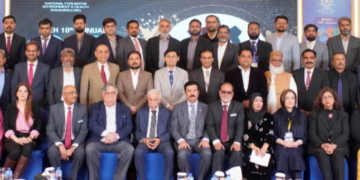


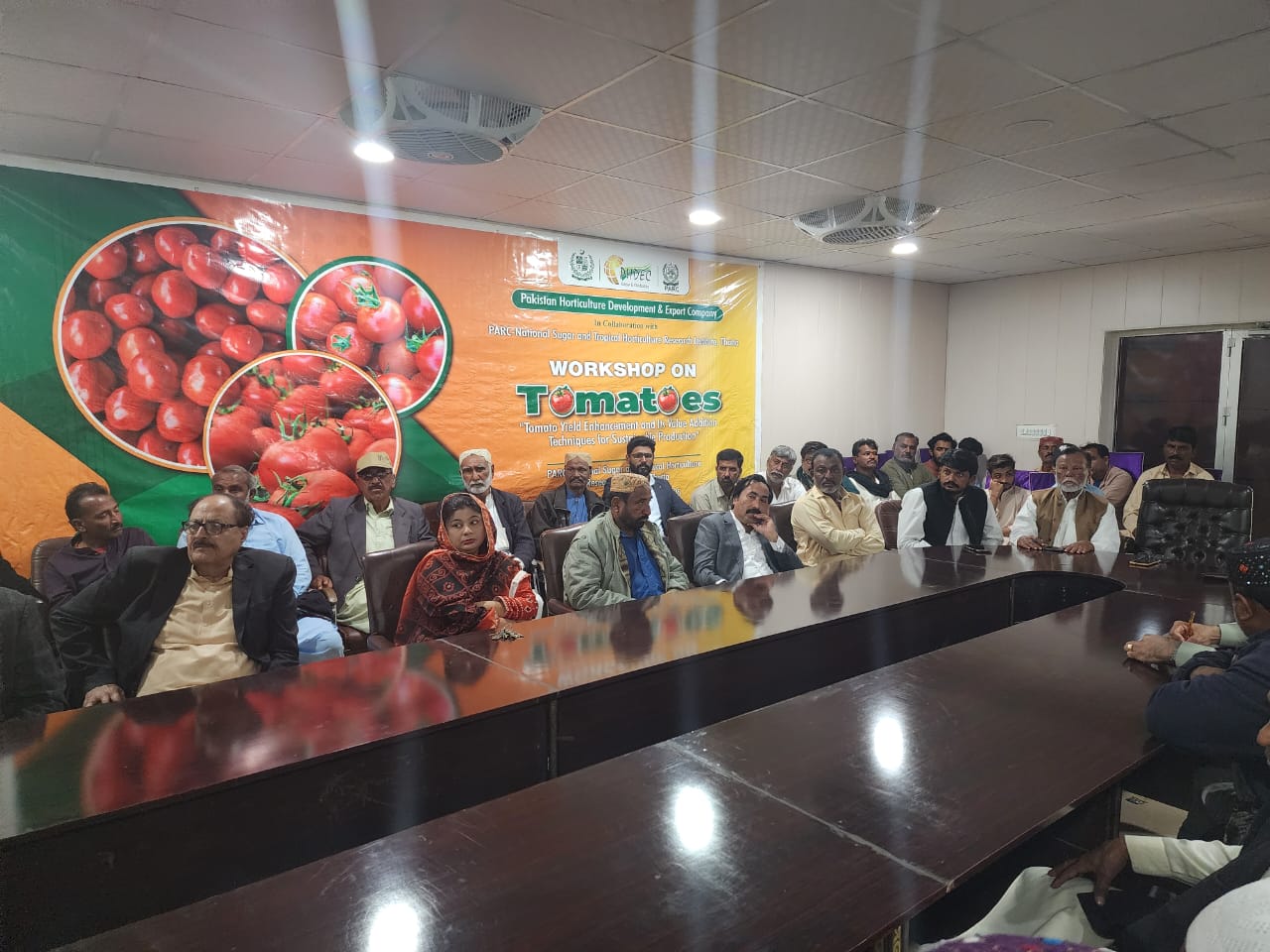
Today (10th December, 2025) Pakistan Horticulture Development & Export Company (PHDEC) in collaboration with National Sugarcane and Horticulture Research Institute (NSHRI, PARC) in Thatta organized a workshop on “Tomato Yield Enhancement and Value Addition Techniques for Sustainable Production in Thatta region of Sindh”. The program brought together growers, processors, extension staff, and value-chain stakeholders to promote modern agronomic practices, sustainable crop management, and post-harvest value addition.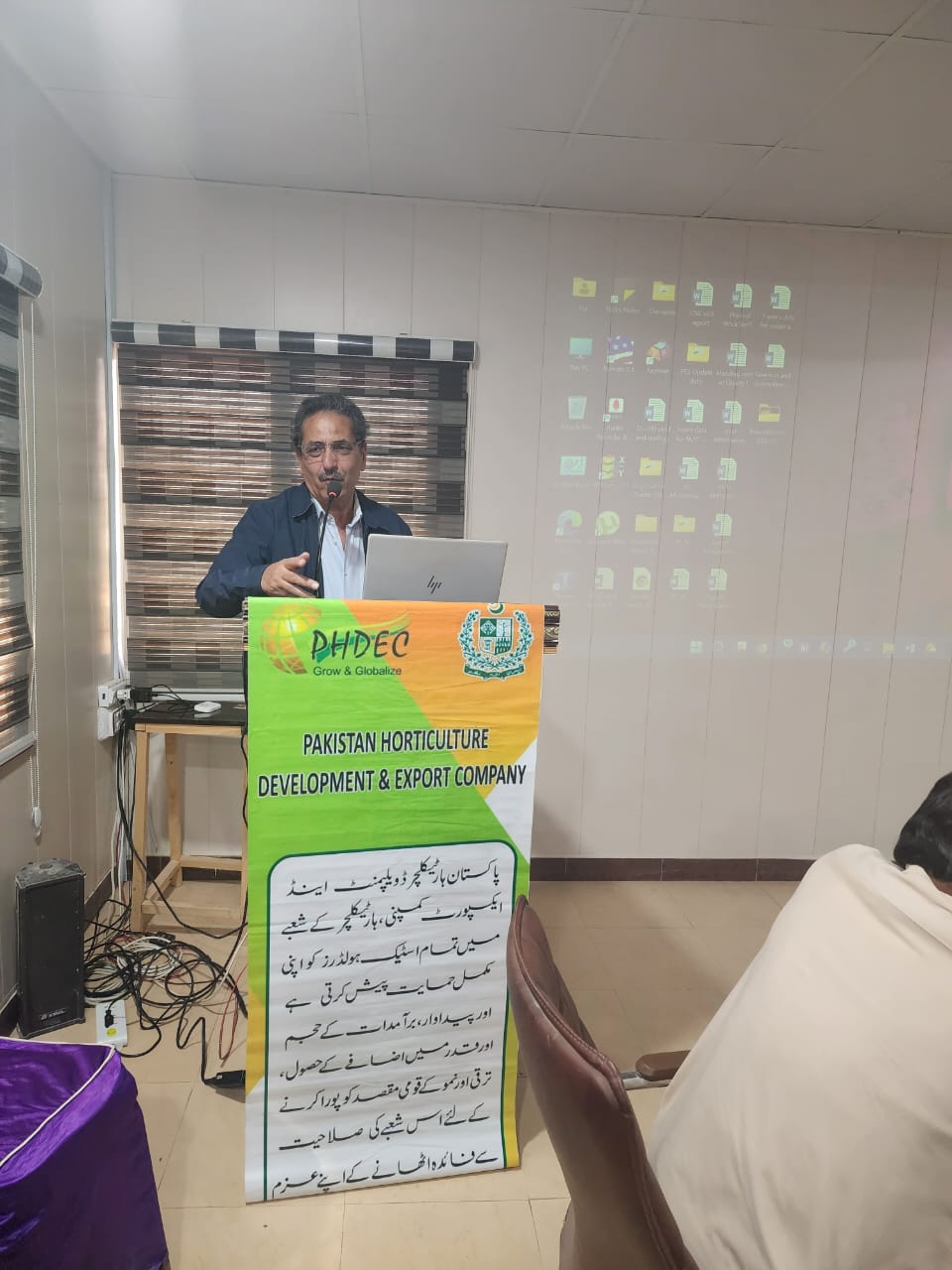
Tomato is one of Sindh’s key horticultural crops with annual contribution of about 25% to the total country’s production, contributing significantly to household income, local markets, and food processing industries. However, farmers continue to face challenges such as low productivity, pest and disease outbreaks, high post-harvest losses, and limited value-addition opportunities. To address these gaps, a dedicated workshop on “Tomato Yield Enhancement and Value Addition Techniques for Sustainable Production in Sindh” was conducted to build the technical capacity of growers, extension workers, and supply chain stakeholders.
The workshop focused on strengthening the adoption of modern production practices, cultivation of tomato on indetminate methods, promoting efficient resource use, and introducing sustainable value-addition models. Experts emphasized the need to shift from traditional practices to scientifically managed production systems that ensure higher yields, improved fruit quality, and better market competitiveness.
Key Areas Discussed During the Workshop
1. High-Yielding Industrial Varieties & Improved Nursery Management
2. Soil Health and Fertility Management
3. Efficient Water & Irrigation Practices
4. Integrated Pest & Disease Management (IPM)
5. Crop Management for Enhanced Yield
Value Addition Techniques for Sustainable Income Enhancement
1. Tomato Paste, Puree & Sauce Production
2. Dehydrated Tomato Products
3. Pickles, Ketchup & Condiments
4. Grading, Sorting & Market Preparation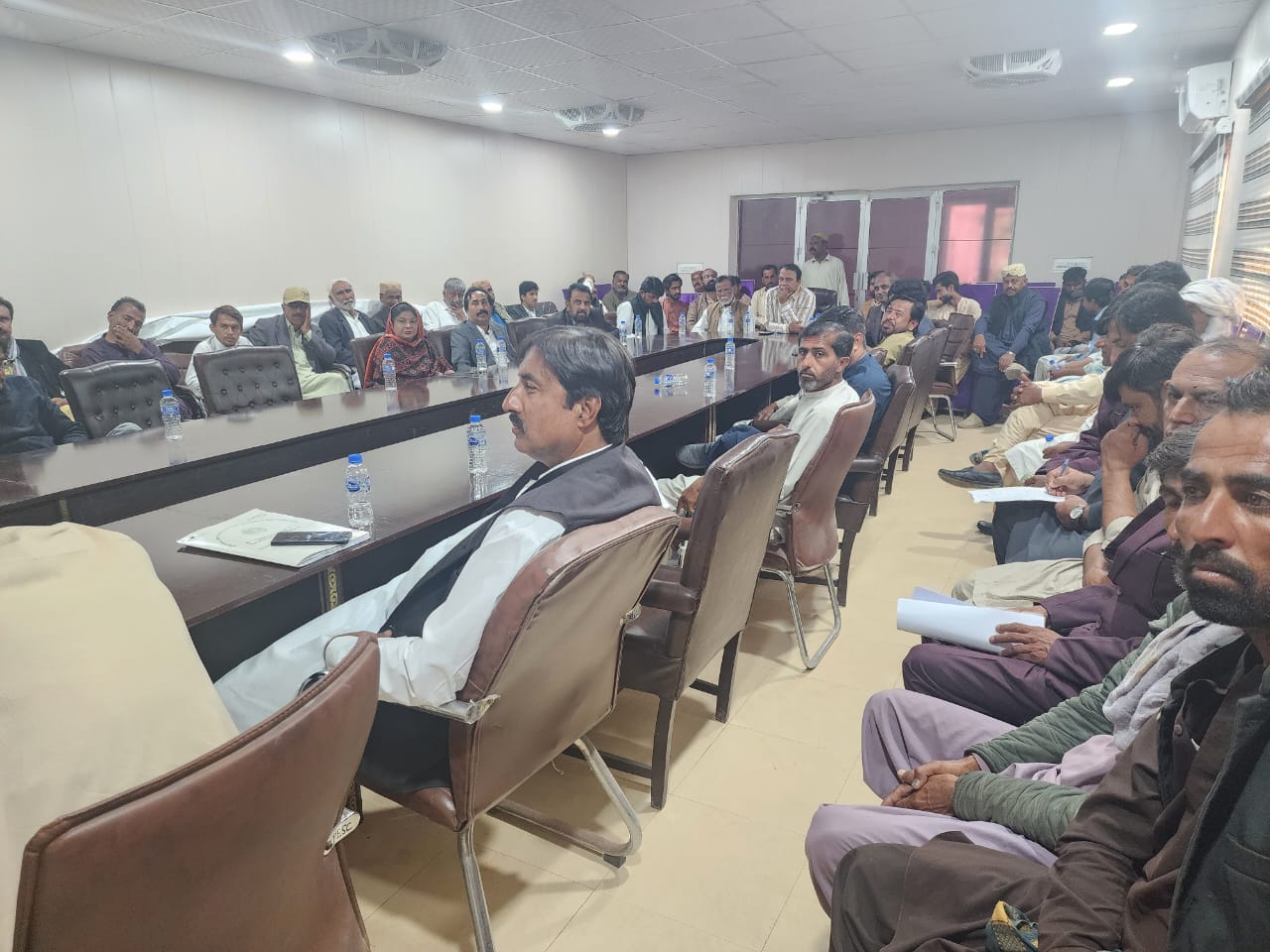
The workshop served as a vital intervention to equip tomato growers and processors in Sindh with modern cultivation techniques and value-addition skills. By adopting these practices and continuing the follow-up actions, tomato production in Sindh can become more profitable, sustainable, and resilient, ultimately creating stronger market linkages and enhancing the region’s economic potential.


ADVERTISEMENT