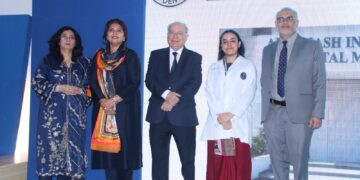


Karachi | January 31, 2026 : The Secretary, National Commission for Human Rights (NCHR), Islamabad, along with the NCHR Sindh team, held a meeting today with Mr. Savio M. Pereira, Chief Executive Officer, Dar-ul-Sukun, Karachi, at the Head Office of the institution.
The meeting was attended by Mr. Bonny (General Manager), Sister Catherine, and Ms. Cockie (Brand Ambassador).
During the meeting, the Secretary, Mr. Ghulam Murtaza, briefed the participants on the mandate, functions, and statutory role of the National Commission for Human Rights. Detailed discussions were held on key human rights issues, with particular focus on the welfare, protection, and overall living conditions of children with disabilities residing at Dar-ul-Sukun.
Subsequently, the NCHR team visited Dar-ul-Sukun to assess the overall living conditions of persons with disabilities. The CEO briefed that Dar-ul-Sukun was established in 1969 by a Dutch philanthropist, Ms. Gertrude Lemmens, with eight special children. Over the years, the institution has expanded and now provides care to more than 800 persons with disabilities, ranging from newborns to elderly residents, across four campuses. He further informed that the institution employs over 350 staff members and is supported through funding from the Government of Sindh and public donations.
The institution currently provides comprehensive facilities and services, including residential care, physical therapy, speech therapy, special education, counselling and psychotherapy, recreational activities, and occupational therapy. The General Manager further highlighted that Dar-ul-Sukun also ensures medical care, nutritious food through a weekly menu, furnished residential facilities, gymnasium for physical activities, toy rooms, and music classes to support the holistic development and well-being of the residents.
Both sides emphasized the importance of institutional coordination and reaffirmed their commitment to strengthening cooperation between NCHR and Dar-ul-Sukun. It was mutually agreed that enhanced collaboration would be ensured to effectively protect and promote the human rights of persons with disabilities.