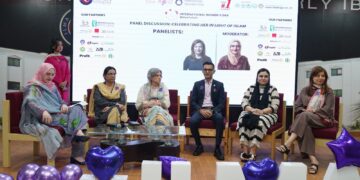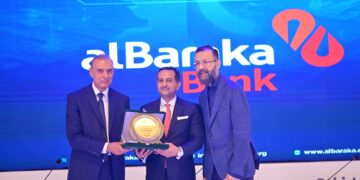


KARACHI, March 9, 2026 – In observance of International Women’s Day 2026, Mian Zahid Hussain, President Pakistan Businessmen and Intellectuals Forum & All Karachi Industrial Alliance, Chairman National Business Group Pakistan, Chairman Policy Advisory Board FPCCI, and Former Provincial Minister Information Technology, has issued a comprehensive framework calling for the accelerated integration of Pakistani women into the nation’s core economic and political sectors. Mian Zahid Hussain emphasized that sustainable macroeconomic stability is inextricably linked to female empowerment, noting that women are not merely participants in Pakistan’s growth, but its primary driving force.
Pakistan possesses a rich, enduring history of formidable female leadership that continues to inspire current generations and shape the national discourse. Mr. Hussain highlighted that the foundation of women’s political and civic participation was laid by the Mother of the Nation, Mohtarma Fatima Jinnah, whose pioneering vision set the stage for democratic engagement in the country. This profound legacy was elevated on the global stage by Shaheed Benazir Bhutto, who shattered glass ceilings as the first female Prime Minister of a democratic Muslim-majority nation. Today, that upward trajectory of leadership continues with figures like Maryam Nawaz Sharif, marking historic milestones in provincial governance. Mian Zahid Hussain stated that these extraordinary figures demonstrate that when Pakistani women are given a platform, they do not just participate in governance—they fundamentally redefine it.
While political representation continues to grow, the rural economy remains the most significant and vital employer of Pakistani women. 68% of Pakistan’s female labor force is employed in agriculture, managing the vast majority of post-harvest activities, livestock care, and crop cultivation. Despite dedicating upwards of 50 hours a week to rigorous farming activities, their immense economic contributions often go unrecognized. Most female agricultural workers operate without formal land ownership, equitable wages, or adequate financial credit. Mr. Hussain urged policymakers to formalize women’s agricultural labor, noting that closing the gender gap in farming resources and providing equal access to agricultural tools could boost crop yields by up to 30 percent, thereby securing national food security and elevating rural livelihoods across the country. Furthermore, transitioning women from informal agricultural labor into formal enterprise is critical, currently, women own fewer than 10 percent of Small and Medium Enterprises (SMEs) in Pakistan. Moreover, the female financial inclusion remains low, with less than 20 percent holding formal bank accounts. Thus, enhancing access to SME financing is essential for moving female-led micro-businesses into the export pipeline.
Transitioning to the modern digital economy, the IT and IT-enabled services (ITeS) sectors offer a unique, vital solution to traditional socio-cultural barriers. Drawing upon his insights as the Former Provincial Minister of Sindh for Information Technology, Mr. Hussain highlighted the transformative power of the digital sector, where women currently represent roughly 14 percent of Pakistan’s IT workforce. He pointed out that remote work, freelancing, and digital entrepreneurship allow women to bypass mobility constraints and participate directly in the global economy. Expanding digital literacy, investing in STEM education for girls, and fostering women-led tech startups are critical, immediate steps toward making Pakistan a dominant regional player in software and digital exports. Pakistan is already ranked among the top freelance markets globally, and empowering female digital entrepreneurs can exponentially increase our IT export remittances.
Mian Zahid Hussain concluded by calling for actionable, systemic change. “Whether tending to our foundational crops or engineering software for the global market, women are indispensable to our national survival and prosperity,” he remarked. “True economic sovereignty will only be achieved when we dismantle the barriers holding them back and fully recognize their role as equal architects of Pakistan’s future.”