

KARACHI: Advisor and Regional Director to the Sindh Ombudsman, Shoaib Ahmed Siddiqui, announced
that the establishment of a joint committee between the Korangi Association of Trade and Industry
(KATI) and the Sindh Ombudsman’s office will enable swift resolution of industrialists’ grievances. He
said complaints lodged through KATI will be addressed on a priority basis, covering issues related to
property tax as well as all other provincial departments.
Speaking during his visit to KATI, Siddiqui encouraged industrialists to register complaints without
hesitation. “Industrialists can submit complaints against any provincial department to the Sindh
Ombudsman, including property tax disputes,” he said.
The ceremony was attended by KATI President Junaid Naqi, Deputy Patron-in-Chief Zubair Chhaya,
Senior Vice President Ejaz Ahmed Sheikh, Vice President Tariq Hussain, KITE Limited CEO Zahid Saeed,
former Chairman Ehtishamuddin, Sindh Ombudsman Assistant Registrar Abdul Shakoor, and other
senior officials and members.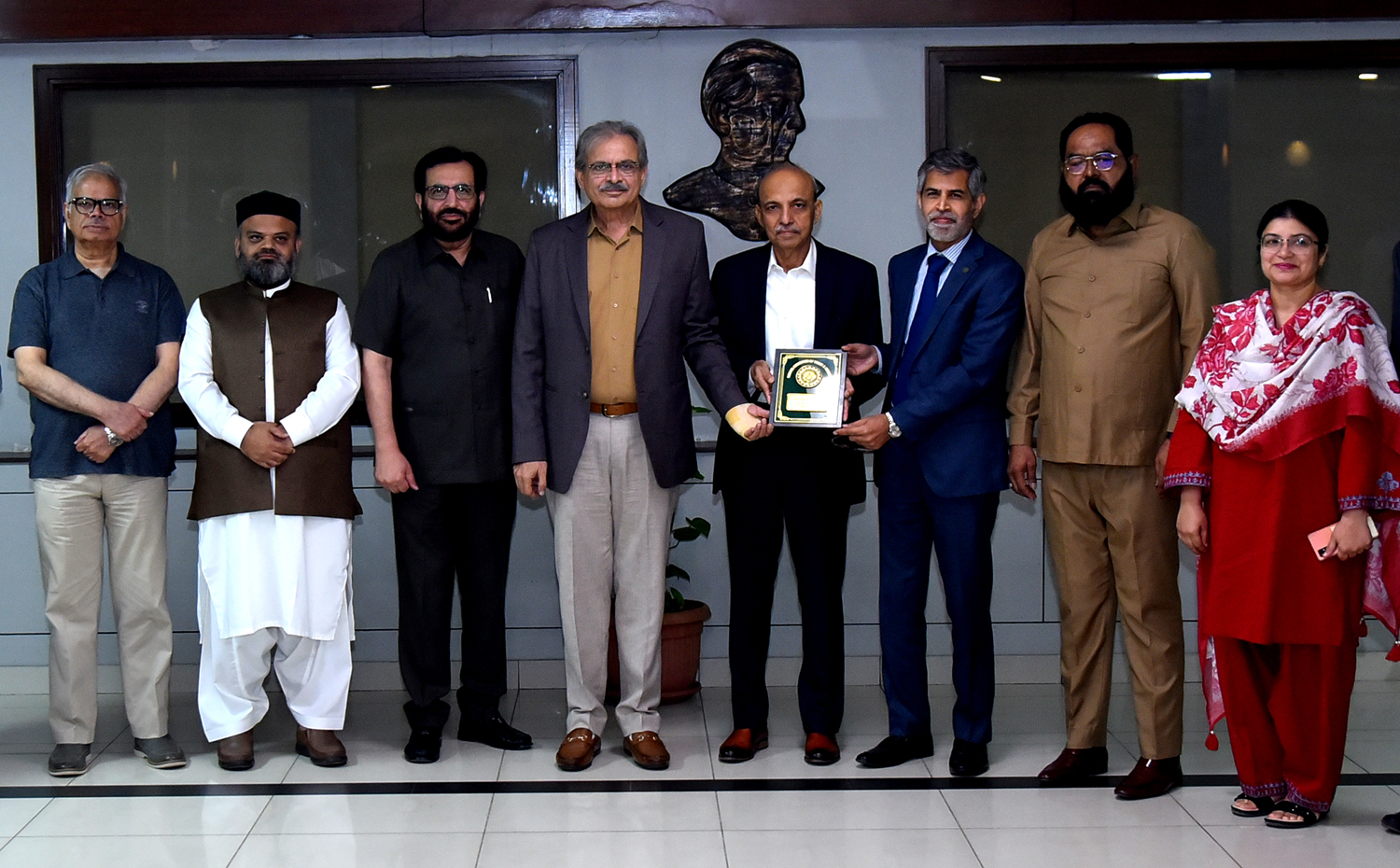
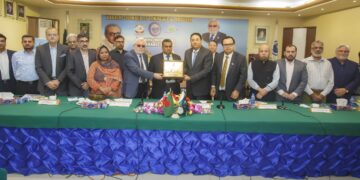
KATI President Junaid Naqi and Deputy Patron-in-Chief Zubair Chhaya present a shield to
Sindh Ombudsman’s Advisor and Regional Director Shoaib Ahmed Siddiqui. Also present were Ejaz
Sheikh, Syed Tariq Hussain, Zahid Saeed, Maheen Salman and Abdul Shakoor.
Siddiqui further said that since Muhammad Sohail Rajput assumed the office of Sindh Ombudsman,
there has been a notable increase in public awareness and a faster pace in resolving public issues. “At
present, 19 regional offices across the province receive between 9,000 and 10,000 complaints annually,
of which 85% are resolved successfully,” he added. Siddiqui emphasized that the position of the
provincial ombudsman is equivalent to that of an honourable High Court judge and has the authority to
take suo motu action. He urged industrialists to lodge policy-related complaints about provincial
institutions without fear.
Earlier, KATI President Junaid Naqi said that most people remain unaware of the scope of the
Ombudsman’s authority, making awareness initiatives essential. He noted that many industrialists avoid
filing complaints individually because they fear facing repercussions. “A joint committee can help
protect industrialists from harassment and negative consequences,” he stated, adding that members
and industrialists should be provided with relevant information to raise awareness.
Naqi criticized the high levels of corruption in provincial institutions, claiming that even minor
administrative tasks require large bribes, which negatively impacts investment. He accused officials of
being the main barrier to modernization and the implementation of technology in public institutions.
“Bribes are demanded for even the smallest matters, which is why many industrialists refrain from
approaching the Ombudsman,” he said.
Naqi contrasted this with Punjab, where he said most official processes have been digitized and are
conducted with ease, without demands for bribery. “As a result, many industrialists are shifting their
operations to Punjab or even overseas,” he remarked.
Deputy Patron-in-Chief Zubair Chhaya said that conducting business in Karachi, Pakistan’s economic
hub, is becoming increasingly difficult. He stated that under the new arrangement, KATI will pursue
industrialists’ complaints through the joint committee.
Chhaya highlighted Karachi’s contribution to the Sindh Revenue Board, noting that of the Rs. 306 billion
collected, 90% comes from Karachi. “Yet the industry receives no benefit from this revenue,” he said.
“Karachi, which was once a developed city, has now become the fourth most polluted city in the world.
Institutions are failing to perform their duties, and the industry bears the punishment.”
KITE Limited CEO Zahid Saeed pointed out that Pakistan’s total exports exceed $32 billion, with Karachi
contributing more than $17 billion. He said industrialists contribute 54% of the Export Development
Fund, but nothing is spent on improving the city. “Sialkot, with $3 billion in exports, is rightly celebrated
as an ‘export city.’ However, industries in a specific section of the Korangi Industrial Zone alone generate
over $4.5 billion in exports. Has Korangi ever been recognized for this?” Saeed asked.
He emphasized that the adoption of technology and digitization is essential for progress, adding,
“Without embracing these tools, development is impossible.”