

[Karachi – January 12, 2026]: For 77 years, the state’s hand has firmly set the price of sugar in Pakistan. Today, that era is ending. In a decisive shift aligned with structural reforms recommended by the International Monetary Fund (IMF), the government is pulling back, choosing to let market forces take the reins of one of the nation’s most vital and notoriously turbulent industries. It’s a move charged with promise and peril.
Into this historic moment, the Institute of Cost and Management Accountants of Pakistan (ICMA) steps forward, not with mere commentary, but with a critical survival guide: “Sugar Sector Deregulation Plan for Pakistan: Gradual with Strong Oversight.”. This research report is developed by ICMA’s Research and Publications Department. This is not just another policy paper. It’s a story about navigating a high-stakes transition. The government, alongside farmers and millers, is embarking on a path to end decades of state intervention. The goal is clear: to break the cycle of inefficiency, attract investment, and let competition flourish. But ICMA’s research unveils a stark, underlying plot: the very actors who have long mastered the game of manipulation under regulation are poised to exploit its absence.
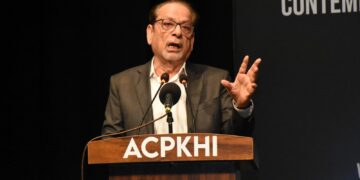
“This work arrives at a pivotal moment,” declares Mr. Muhammad Yasin, Chairman of the ICMA Research and Publications Committee, launching the report. “Pakistan is stepping away from over seventy years of sugar price controls, a bold move that could reshape one of our most vital and complex industries. Yet, as recent parliamentary findings reveal, this sector faces serious challenges such as misreported stocks, artificial shortages, weak oversight. These are not merely statistics; they impact farmers, millers, businesses, and families nationwide.”
The report’s narrative is compelling and clear-eyed, identifying the persistent villains in this saga: entrenched cartels, chronic delays in farmer payments, phantom stock figures, and politically influenced trade decisions. These are not ghosts of the past but active forces that, unchecked, will continue to strangle fair pricing and threaten national food security.
The ICMA study outlines a framework for what comes next, forecasting ten major changes expected as pricing, exports, imports, and marketing become fully market-driven. Yet, its core argument is a powerful warning: this new chapter will fail if written with a naive belief in market purity alone.
ICMA’s answer is the “Gradual & Strong Oversighted Deregulation Plan,” advocating for a phased, semi-deregulated transition. It marries market freedom with muscular enforcement to stabilize the sector and shield its most vulnerable participants.
The blueprint is both high-tech and high-touch, featuring actionable strategies:
(1) The Digital Watchtower: The cornerstone is a National Agricultural Stock Management and Monitoring System (NASMMS) – a real-time E-Portal which is not just a database but an early-warning system proposed by ICMA. By analyzing live signals from economic indicators and market fluctuations, it can spot trouble brewing—a looming shortage, a suspicious surplus and inform instant, rule-based policy responses to restore stability before crises erupt.
- The Rules of Fair Play: To break the cycle of collusion, the ICMA plan demands effective antitrust enforcement and introduces rule-based trade triggers for imports and exports, stripping away the opacity that allows for market-shattering, politically-driven decisions.
- The Farmer’s Shield: Justice begins with timely payment. The plan champions escrow-based payment systems to guarantee farmers’ dues and a hybrid cane pricing model (blending regional cost with the CONSECANA model) for truly equitable returns. It expands warehouse receipt systems to bring transparency to the supply chain and proposes targeted subsidies as a safety net for smallholders.
- The Future-Proofing Pact: Acknowledging that the greatest risks may come from the skies, the plan integrates climate-resilient risk management directly into the market framework.
This blueprint is forged with global insight. By drawing lessons from the battles and victories in the sugar sectors of India, Brazil, Colombia, the EU, Australia, Malawi, Tunisia, Mozambique, and South Africa, ICMA distills a universal truth: successful deregulation anywhere has never been a simple act of removal. It is always a act of replacement, swapping blunt controls for strong institutional checks, transparent data systems, and robust safety nets.
“Policymakers have called for full deregulation to curb manipulation. We agree change is essential,” Yasin states. “But simply removing controls is insufficient. Our plan prioritizes strategic food reserves, fair competition, digital monitoring, and timely payments to farmers, because reform must protect people, not just open markets. This is a practical roadmap for building a sugar sector that is resilient, competitive, and equitable.”
The final message of ICMA narrative is unambiguous and conclusive: Deregulation supported by strong governance—not deregulation alone is the only viable path to a modern, competitive, and food-secure sugar and agriculture sector in Pakistan. As the nation turns this page, the report stands as an essential manifesto, urging all stakeholders to collaborate and ensure this historic transition becomes a story of triumph, not turmoil.