

3rd December, 2025
Honorable Women Entrepreneurs, Corporate and banks executives, My fellow colleagues from the State Bank of Pakistan, Distinguished guests, Ladies & Gentlemen Assalam-o-Alaikum and a very good evening;
It is my pleasure to welcome you all to the State Bank of Pakistan, where we are celebrating the Pakistan Women Entrepreneurship Day 2025. It is a continuation of our “Empower Her campaign” initiative, that we launched last year under the banner of Pakistan Women Entrepreneurship Day. What began as an awareness push has now become a national network — including representation from banks, business chambers, entrepreneurs, and civil society members.
I am delighted to note that all of us are taking the campaign forward this year, with a sharper focus on actionable proposals, including dedicated financing programs, mentorship, digital onboarding, and capacity-building initiatives – all of which are geared to increase the participation of our female population in the formal economy.
Ladies and gentlemen,
There is now widespread understanding that no nation can grow when half of its population is excluded from the financial system. Research by the World Economic Forum, OECD, and McKinsey suggest that including women fully in the workforce – as well as in leadership positions – is not only a matter of fairness, but also a powerful driver of economic growth and resilience.
In Pakistan, despite the multiple challenges, as well as the cultural and structural barriers, I am pleased to note that our women entrepreneurs have shown remarkable determination and courage. Their contributions extend across diverse sectors, including agriculture, manufacturing, technology, retail, communication, and other services. And we need to take this momentum forward, to ensure that our female population have access to the supportive environment where they can flourish and contribute more effectively to our economy.
Ladies and gentlemen,
Over the past decade, the State Bank of Pakistan has pursued deliberate, multi-pronged strategy to expand women’s financial inclusion, with much-valued support from our multilateral partners and the corporate sector. As a result of our collective efforts, women’s financial inclusion has risen from 4 percent to 52 percent, and we have succeeded in narrowing the gender gap from 47 percent in 2018 to 30 percent in 2025. More than 17.6 million new women-owned bank accounts have been added since 2021, reflecting active engagement in the financial system.
Going forward, as part of the third edition of the National Financial Inclusion Strategy 2024–28, we now aim to push financial inclusion to 75 percent by 2028, and reduce the gender gap to 25 percent. To help us achieve these targets, I am glad to note the support from the ADB’s Women Inclusive Finance Program, as well as the innovative Challenge Fund facilities, which are financing women-led business ideas and helping with market access.
At the same time, let me emphasize that increase in financial inclusion for our female population would not be possible without support from our banking industry. In this regard, I will acknowledge the ongoing institutional shift within our banks. Over 14,600 women have joined the banking workforce in the last three years, raising the overall ratio of female employees from 13 to 17 percent. Banks now have women on their boards, and also have diversity and inclusion councils, dedicated women finance teams, and frontline women champions in most branches. This structural shift and greater female representation across our banking sector hierarchy is important, as it will have a ripple effect and encourage more women to become part of the formal economy. Moreover, having greater female representation in leadership positions would ensure that we have innovative products that are tailor-made for female borrowers and entrepreneurs.
At the State Bank, we recently hired a batch of young female graduates under our Emerging Women Leaders Initiative. And now we also have a female member on the SBP’s Board. At the national level, Pakistan became a global signatory to the Women Entrepreneurs Finance Code in February 2025, becoming the 19th member worldwide. SBP, along with 22 banks, have pledged to share data, introduce new actions, and appoint leadership to improve women’s access to finance. Furthermore, Pakistan’s banking industry is continuing to play a crucial role in turning policy into action. This year, with the support of our banking industry and partner institutions, we conducted more than 300 awareness and mentorship programs across 55 districts, engaging over 45,000 women across the country. This puts Pakistan on the global map in terms of turning inclusion commitments into measureable accountability.
Ladies & Gentlemen;
I am pleased to note that financing to women entrepreneurs set a new benchmark of 230 billion Rupees, with 974,000 loans disbursed between November 2024 and October 2025 — a testament to expanding outreach and growing trust. Yet, the portfolio breakdown indicates that meaningful scale-up is still ahead of us. Nearly 93 percent of these loans amounting to 113 billion Rupees, fall under microfinance, indicating that most women remain clustered in micro and entry-level segments. At the upper end, 611 women-led corporate and commercial enterprises accessed financing of 58 billion Rupees, representing just 1 percent of all loans disbursed by commercial banks — a clear indication of the structural barriers that still persist.
Let me also emphasize that we perhaps also need to look beyond just numbers, and focus on the bigger picture. Our over-arching focus needs to be on providing an enabling environment that can foster greater female participation in the formal economy on a sustainable basis. While a lot of progress has been made, a lot more needs to be done, especially with regards to addressing the structural gaps that still inhibit greater female participation in the labor force. Transportation services; flexible timings; and daycare facilities are just some of the basic yet crucial services that many women count on today, so that they do not have to choose between their professional careers and their families. Once we are able to provide this supportive environment, I am confident that our targets would be well within our reach.
In conclusion, I want to reiterate that to sustain the progress made so far, we must continue building the ecosystem, where women-led businesses can access finance, markets, and mentorship. Let us renew our commitment to a future where every woman with a vision has the means to achieve it.
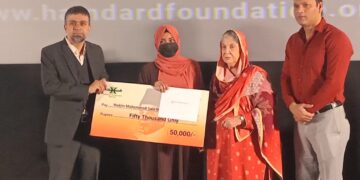
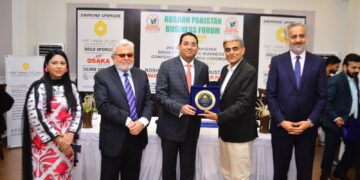
With that, I congratulate the award winners and participants, whose achievements symbolize the creativity and resilience of our women entrepreneurs.
I thank you for your time.