

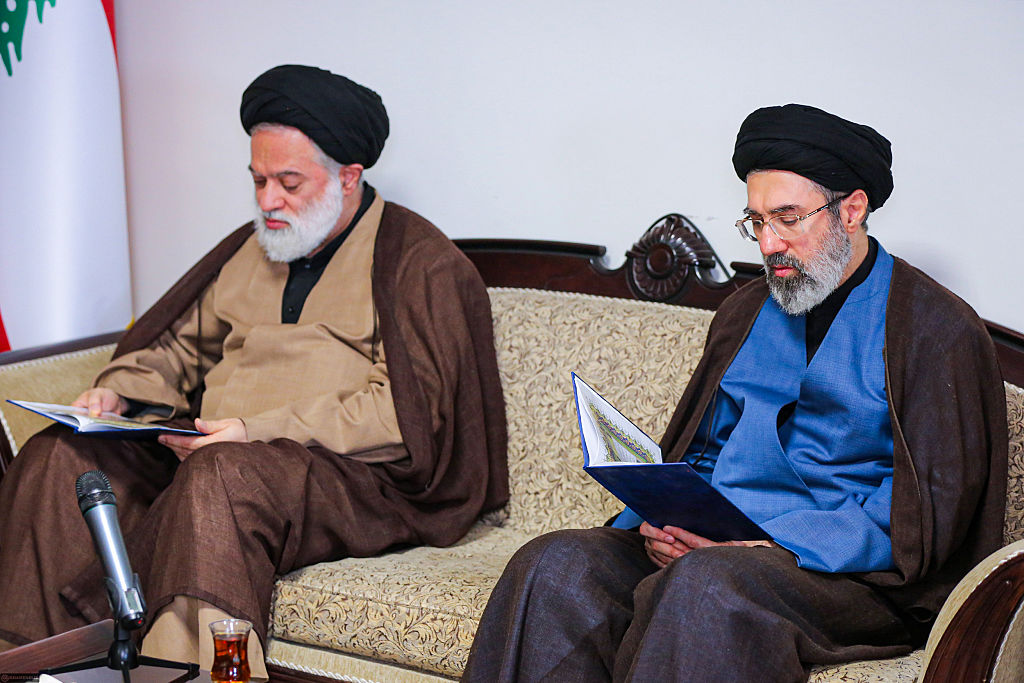
The sudden killing of Iran’s long-serving Supreme Leader Ayatollah Ali Khamenei during the ongoing U.S.–Israel military campaign has created an unprecedented leadership crisis inside the Islamic Republic. Within days, the Assembly of Experts announced the elevation of his second son, Ayatollah Mojtaba Khamenei, as the new Supreme Leader.
However, the transition has been anything but stable. Intelligence reports, international media investigations, and visible political signals within Iran suggest that the country may now be operating under what some analysts describe as “headless leadership”—a system in which the nominal leader is absent, possibly incapacitated, and competing factions struggle to control the state.
This article examines three central questions:
1. Why was the elder Khamenei reportedly wary of his son assuming power?
2. What personal and political controversies surround Mojtaba Khamenei?
3. Is Iran now experiencing a division between civilian pragmatists and hardliner clerical factions amid the war?
1. Why the Elder Khamenei Distrusted Mojtaba
According to U.S. intelligence assessments cited by CBS News, the late Ayatollah Ali Khamenei had serious reservations about his son’s ability to rule. Intelligence briefings suggested he considered Mojtaba “unqualified” and lacking the intellectual depth required for supreme leadership.
Several structural concerns shaped this distrust:
1. Lack of Religious Credentials
Unlike previous Iranian supreme leaders, Mojtaba does not possess the highest clerical rank traditionally expected for the position. Analysts have long argued that his theological qualifications were insufficient to command the religious establishment.
2. Fear of Dynastic Monarchy
The Islamic Revolution of 1979 was built on opposition to hereditary rule under the Shah. Passing power from father to son risks transforming the Islamic Republic into a dynastic theocracy, something even Ali Khamenei reportedly opposed.
3. Institutional Opposition
Some clerics feared that Mojtaba’s appointment would empower the Islamic Revolutionary Guard Corps (IRGC) to dominate the political system, turning the supreme leader into a symbolic figure controlled by military elites.
Ironically, the very scenario Ali Khamenei feared appears to have unfolded after his death.
2. The Role of the Revolutionary Guards in His Rise
Reports suggest that Mojtaba’s rise was less a religious decision than a strategic one.
During the chaos following Ali Khamenei’s death, Iran’s powerful Revolutionary Guard Corps (IRGC) reportedly pressured the Assembly of Experts to approve Mojtaba as the successor.
The rationale was simple:
* Mojtaba had deep connections with the security establishment.
* He had long operated behind the scenes as his father’s political adviser.
* His leadership would preserve continuity during wartime.
But this arrangement has created a paradox:
The Supreme Leader may now be dependent on the very military institution he is supposed to command.
3. Personal Controversies Surrounding Mojtaba Khamenei
Mojtaba Khamenei has remained an enigmatic figure for decades, rarely appearing in public while wielding substantial behind-the-scenes influence.
Several controversies have surrounded him:
Secret Financial Networks
Investigations suggest Mojtaba oversaw a vast financial empire linked to overseas assets and investments, including luxury properties and offshore holdings managed through intermediaries.
Hardline Ideological Background
He studied under radical clerical figures and is closely associated with hardline revolutionary factions inside Iran’s political system.
Role in Security Crackdowns
Analysts have previously linked Mojtaba to the security apparatus responsible for suppressing internal dissent, particularly during election protests in earlier years.
These issues contributed to widespread skepticism within Iran’s clerical establishment regarding his legitimacy.
4. Is Mojtaba Khamenei Alive?
Perhaps the most extraordinary development is the uncertainty surrounding Mojtaba Khamenei’s current condition.
Multiple reports suggest that he has not appeared publicly since assuming leadership, fueling speculation that he was injured during the same airstrikes that killed his father.
Some reports claim:
He may have suffered severe injuries during the attack.
* He may have been transported to Russia for emergency surgery.
* His statements have been delivered only through television broadcasters, not live appearances.
Even U.S. officials have publicly questioned whether he is still alive.
Iranian authorities insist he remains healthy and in charge of the country, but the absence of verifiable footage has intensified speculation about what some analysts call “the ghost ayatollah phenomenon.”
5. Emerging Power Struggle Inside Iran
The current crisis appears to have produced three competing centers of power:
1. Civilian Leadership
Some political officials appear increasingly open to negotiation or surrender to end the war, especially as economic collapse and military losses mount.
2. Revolutionary Guards
The IRGC now controls much of Iran’s military strategy and may effectively be running the state during the leadership vacuum.
3. Hardline Clerical Establishment
Clerics aligned with Mojtaba’s ideological camp are pushing for continued resistance against the United States and Israel, framing the war as a religious struggle.
These divisions have created the perception that Iran is simultaneously:
* militarized,
* clerically fragmented, and
* politically uncertain.
6. The Strategic Question: Can a Headless Regime Survive?
History suggests that authoritarian systems can survive even with weak leaders if security institutions remain unified.
However, Iran faces a unique challenge:
1. War with the United States and Israel
2. Economic collapse due to sanctions and infrastructure destruction
3. A leadership transition marked by uncertainty and secrecy
If Mojtaba Khamenei is indeed incapacitated—or worse—the regime may soon confront a deeper constitutional crisis over who truly holds the office of Velayat-e-Faqih, the ultimate authority of the Islamic Republic.
Conclusion
The Islamic Republic of Iran now stands at one of the most dangerous crossroads in its history.
The death of Ayatollah Ali Khamenei removed the central figure who had balanced clerics, military commanders, and political elites for nearly four decades. His son Mojtaba’s controversial succession—combined with rumors of injury or death—has created a vacuum that may transform Iran’s political system.
If the current trajectory continues, Iran may evolve from a clerical republic into a militarized revolutionary state dominated by the Revolutionary Guards, with the Supreme Leader reduced to a symbolic or even absent figure.
The coming weeks will determine whether the Islamic Republic can maintain cohesion—or whether the war has triggered the first real structural fracture in the regime since 1979.
References
1. CBS News. “U.S. intelligence shows Khamenei was wary of his son taking power.”
2. Times of Israel. “Trump briefed on intel showing Ali Khamenei thought son unfit to lead.”
3. ABC News. “What to know about Mojtaba Khamenei as Iran’s possible leader.”
4. Guardian. “Mojtaba Khamenei chosen as Iran’s new supreme leader.”
5. Iran Analytica. “How Mojtaba Khamenei became Supreme Leader.”
6. Washington Institute. “What kind of Supreme Leader would Mojtaba Khamenei be?”
7. Radio Free Europe / Radio Liberty. “Mojtaba Khamenei follows in father’s footsteps.”
8. Council on Foreign Relations. “Leadership transition in Iran.”
9. CBS News video report on speculation about Mojtaba’s injuries.
10. Multiple international reports on Mojtaba’s health rumors and absence.

https://medium.com/@greetmujtaba/headless-leadership-in-iran-0e01617dd25e