Google AI Blue Origin’s New Glenn Rocket Selected for Space Data Centre Mission
Google plans to launch computing satellites aboard Jeff Bezos’ rocket in 2029 as it explores solar-powered artificial intelligence infrastructure in orbit.
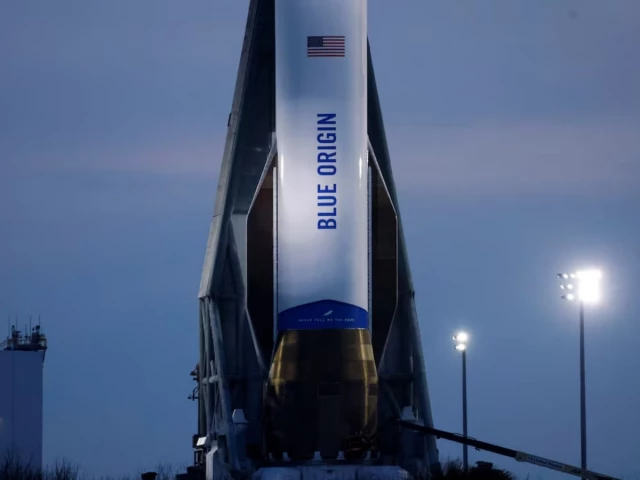
Google AI explores space-based computing as Blue Origin prepares to launch Project Suncatcher satellites in 2029.
Jeff Bezos’ Blue Origin has secured a major launch agreement with Google. The company announced on Thursday that Alphabet’s technology giant had selected its New Glenn rocket for Project Suncatcher, an experiment designed to run artificial intelligence systems in space.
The planned mission marks another step towards moving energy-intensive AI computing beyond Earth. Google aims to use solar power in orbit to reduce pressure on electricity grids, land and cooling infrastructure.
Companies including Elon Musk’s SpaceX and startup Starcloud are also exploring orbital data centres. Demand for AI computing continues to grow, placing increasing pressure on infrastructure and energy supplies on Earth.
Google Plans First Dedicated New Glenn Mission
The launch is targeted for the first quarter of 2029. It will mark Google’s first heavy-lift flight dedicated to Project Suncatcher.
New Glenn will carry several computing satellites into orbit. Each satellite will contain Google’s tensor processing units (TPUs), which are specialised chips designed to run AI programmes.
Google estimates that each satellite will provide computing capacity roughly equivalent to a rack of servers in a conventional data centre.
Anthropic IPO AI Firm Targets $1.8 Trillion Valuation in Historic Market Debut
The satellites will enter an orbit that offers near-continuous sunlight. This will allow Google to investigate whether solar energy can support intensive computing operations in space.
Project Suncatcher Tests AI Technology in Orbit
The agreement also gives Blue Origin an important future mission for New Glenn. The company is seeking to expand its launch business following delays and a launchpad explosion in May.
Google and Planet Labs launched the first Project Suncatcher prototype aboard a SpaceX rocket in October. The companies later reported that the satellite was operating as expected after establishing contact.
That initial mission is testing whether Google’s chips can withstand the extreme conditions of space. These include launch forces, radiation and significant temperature variations.
Engineers are also studying how to manage heat generated by powerful computing chips. Unlike conventional data centres, satellites cannot rely on ordinary airflow for cooling.
Instead, they must release heat through specialised pipes and panels. Radiation also presents a challenge because it can damage electronic components and corrupt data.
High Costs Remain a Major Obstacle
Despite the potential benefits, commercial orbital data centres remain years away, according to industry experts.
High launch costs, complex engineering requirements and limited satellite production capacity present major obstacles.
Companies must also demonstrate that computing equipment can operate reliably in space over extended periods. Cooling systems, radiation protection and maintenance requirements will remain central challenges.
Nevertheless, Google’s Project Suncatcher reflects growing interest in alternative infrastructure as AI demand accelerates. The 2029 mission will provide an important test of whether space-based computing can become a practical option for the industry.