

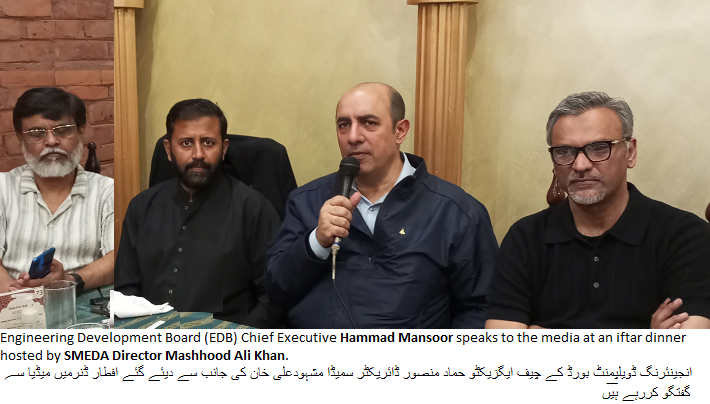
KARACHI: A fully electric “Made-in-Pakistan” car priced at around Rs1 million is expected to enter the market by June 2026, while a significant reduction in taxes on vehicles is also likely in the upcoming federal budget, making hybrid, electric and fuel-powered vehicles more affordable.
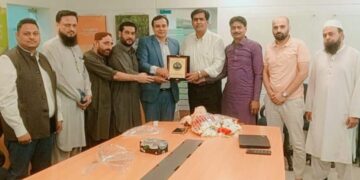
These views were expressed by Engineering Development Board (EDB) Chief Executive Hammad Mansoor while speaking to journalists at an iftar dinner hosted by SMEDA Director, former PAPAAM chairman and auto sector analyst Mashhood Ali Khan in Karachi.
Mansoor said the long-standing dominance of a few large automobile companies was ending, adding that car prices could fall by up to Rs2.5 million as new manufacturers enter the market and localization increases.
He said Pakistan’s first lithium battery manufacturing plant would begin production by May, while another plant is expected to start operations in September. About 74 per cent of battery components will be produced locally, which will significantly reduce the cost of electric vehicles due to locally manufactured spare parts.
According to Mansoor, electric vehicles being developed locally will have a range of around 180 kilometres on a single charge, while some advanced models may reach up to 1,200 kilometres. He added that improved battery technology and charging infrastructure would make long-distance travel more feasible.
He said several industries, including companies in the cement sector, are shifting towards battery production. Batteries currently imported at about $96 could be produced locally for nearly $72.
Under the prime minister’s PAVE programme, around 40,000 motorcycles and rickshaws are being provided on subsidy, and electric vehicles are also expected to be included in the scheme.
Mansoor said the government’s new auto policy focuses on localization, which is essential for exports and greater competitiveness. He added that vehicle taxes are likely to be significantly reduced in the next budget, while motorcycle prices could also decline substantially within the next two years.
He further revealed that a vehicle assembly plant is being set up in Lahore while a battery manufacturing facility is being established in Karachi. According to him, 42 automobile manufacturing plants have already been set up in Pakistan, ending the monopoly previously enjoyed by a few large companies.
Speaking on the occasion, Mashhood Ali Khan said small and medium enterprises (SMEs) are the backbone of Pakistan’s economic resilience and growth. He noted that SMEs employ around 25 million people and contribute about Rs2.8 billion in exports.
He said the SME sector demonstrated remarkable resilience during the Covid-19 pandemic by localizing production and maintaining supply chains despite limited resources. However, he stressed that timely policy support is essential to unlock the sector’s full potential.
Khan emphasized the need for consistent policies, easier access to finance and export facilitation to enable Pakistani SMEs to compete in global markets, generate employment and support economic growth.
He also recommended supportive industrial, financial and trade policies, improved access to finance and cluster-based development, as well as policy continuity to strengthen the SME sector and boost exports.