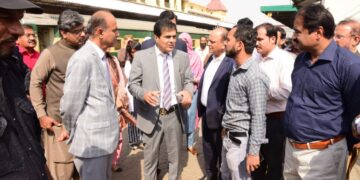


PESHAWAR: Finance Minister Muhammad Aurangzeb emphasized on Wednesday that all sectors must contribute to boosting Pakistan’s exports, urging the business community to break free from the boom-and-bust cycle.
Speaking in Peshawar, he noted that Pakistan’s import-led growth model leads to dollar shortages whenever economic growth hits 4%, forcing the country to seek IMF assistance to avoid default.
In 2023, Pakistan’s foreign reserves dropped to $4.6 billion, covering less than three weeks of imports, while the rupee experienced a historic 15% devaluation. The country secured a $7 billion IMF bailout in July 2024, aimed at stabilizing the economy and fostering sustainable growth.
Aurangzeb urged industries beyond textiles, agriculture, and IT to contribute to exports, even if it’s just 1% or 2%, highlighting that rice exports are expected to reach $4 billion this year.
On FBR reforms, he announced steps to reduce human intervention in tax collection, stating that limiting manual processes would curb corruption and revenue leakage. A major reform includes shifting tax policy from FBR to the finance ministry, making it economically driven rather than administratively controlled.
The government established the Tax Policy Office (TPO) in February, fulfilling an IMF commitment to separate tax policymaking from revenue collection. The TPO will use data modeling, revenue forecasting, and international tax compliance to shape future policies.