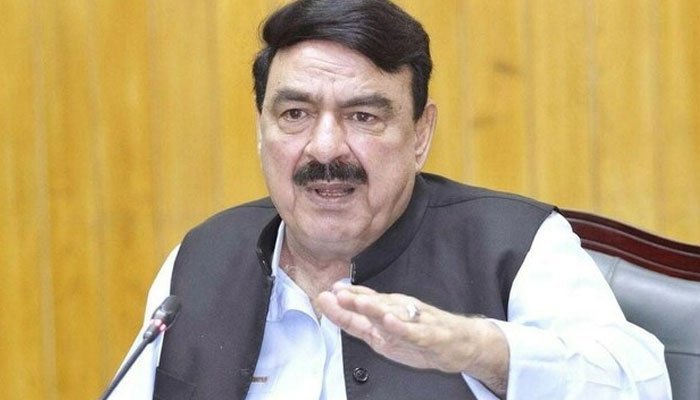


Karachi (November 28, 2025) : Mian Zahid Hussain, President Pakistan Businessmen and Intellectuals Forum & All Karachi Industrial Alliance, Chairman National Business Group Pakistan, Chairman Policy Advisory Board FPCCI, and Former Provincial Minister Information Technology, stated today that Pakistan’s economy is presenting a contrasting picture of capital market success against real-sector challenges. While the Pakistan Stock Exchange (PSX) has shattered records, crossing the historic 161,000-point barrier, indicators in foreign direct investment (FDI) and tax revenue collection suggest significant hurdles remain for the fiscal year.
Mian Zahid Hussain noted that the KSE-100 index reached an unprecedented high of 161,611 points. This surge is driven by local liquidity and optimism regarding Pakistan’s stability in security and the sustainability of the hard-won stability in inflation.
However, the veteran business leader warned that the “real economy” faces headwinds. Latest data reveals that Foreign Direct Investment (FDI) for the first four months of the fiscal year (July-October 2025) has contracted by 26%, standing at just $747.7 million compared to $1.01 billion in the same period last year. Inflows from key partner China have notably halved, signaling a need to restore foreign investor confidence.
Furthermore, Mian Zahid Hussain highlighted the widening shortfall in the Federal Board of Revenue (FBR) collections. Despite a revised target, provisional data for November 2025 indicates a collection of approximately Rs 852 billion against a target of Rs 1,003 billion, resulting in an expected shortfall of nearly Rs 100 billion. “This gap underscores the critical need to broaden the tax base rather than increasing the burden on existing taxpayers and the industrial sector,” he remarked.
On the international front, Mian Zahid Hussain observed that while the IMF has reached a Staff-Level Agreement with Pakistan—with the Executive Board scheduled to review the release of the $1.2 billion tranche on December 8, 2025—the Fund’s latest diagnostics warn that deep-rooted structural inefficiencies must be addressed to unlock potential GDP growth.
He also expressed concerns over the security situation, citing recent unfortunate terrorist attacks in Rawalpindi, Peshawar (FC) and Bannu, which he noted negatively impacted investor sentiment.
Looking ahead, Mian Zahid Hussain projected a period of cautious consolidation. While the stock market may continue its bullish trend, the real challenge lies in bridging the fiscal gap and boosting exports. GDP Growth is projected to remain modest at around 3.0% to 3.4%. He emphasized that the successful disbursement of the IMF tranche in December is expected to stabilize foreign reserves, currently hovering around $14.5 billion, but the government must accelerate energy and taxation reforms to avoid further mini-budgets.
“The government must focus on reducing the cost of doing business, specifically energy tariffs, bank markup, to convert stock market optimism into tangible industrial growth, export enhancement, job creation and poverty alleviation,” Mian Zahid Hussain concluded.