

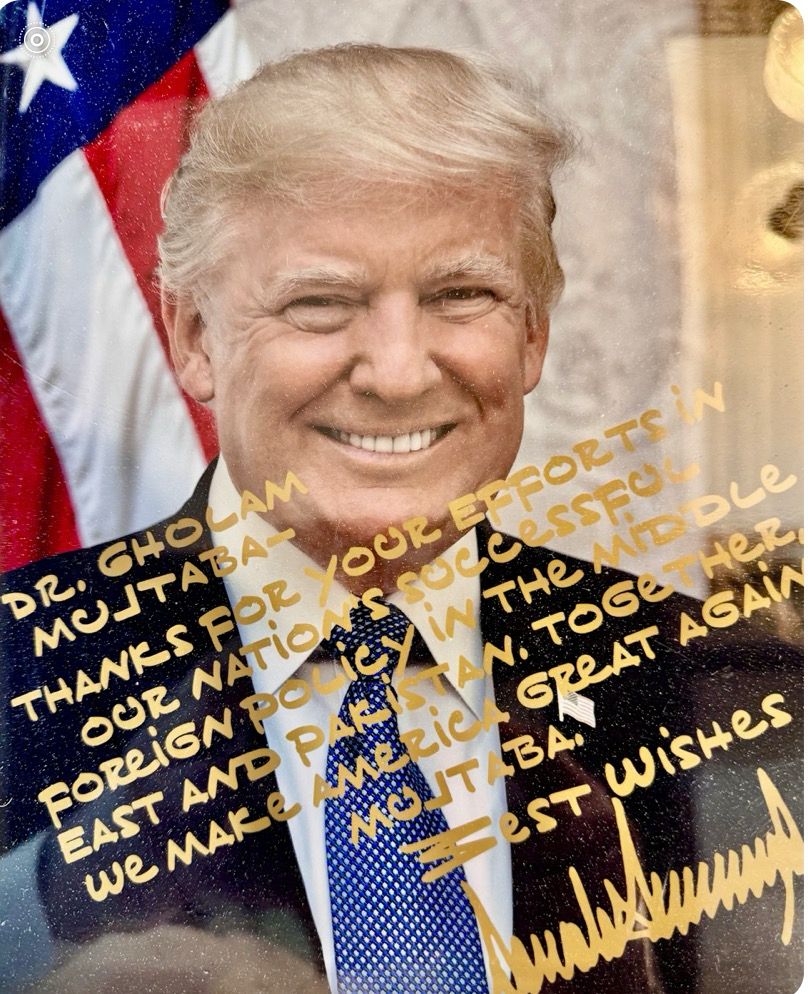
By Dr. Gholam Mujtaba, MS, MD, Ed.D.
Chairman, Pakistan Policy Institute USA
The United States has signaled a clear strategic shift in South Asia by lowering tariffs on Pakistani exports to about 19%, significantly less than the 25% rate on Indian goods. This change in trade policy reflects more than just economic considerations; it also mirrors the shifting geopolitical landscape, where Pakistan is being regarded as a dependable partner compared to an increasingly adversarial India.
A Strategic Realignment Based on Trust
The tariff reduction, part of a recent bilateral trade and energy agreement, highlights Washington’s increasing confidence in Pakistan’s leadership—especially its military leadership. The core of this new approach is reflected in the exclusive White House meeting between General Asim Munir and President Donald J. Trump, marking a rare, high-level military-to-executive exchange that bypassed civilian intermediaries.
This historic interaction marks a pivotal moment in U.S.-Pakistan relations, reaffirming that the American administration is placing strategic trust in Pakistan’s military establishment as the anchor of stability in the region.
Tariffs Drop: Pakistan Surpasses India
The Trump administration’s policy adjustment has resulted in a 19% tariff on Pakistani goods, down from the initially proposed 29% under the “Liberation Day” tariff plan. Meanwhile, India faces a 25% tariff because of its ongoing defense and energy dealings with Russia—an alliance that has raised alarms in Washington.
This policy contrast shows the United States’ aim to reward Pakistan’s cooperation in regional security and economic partnerships, primarily as the two nations work together to develop Pakistan’s oil and energy resources.
Capitalizing on a Favorable Shift
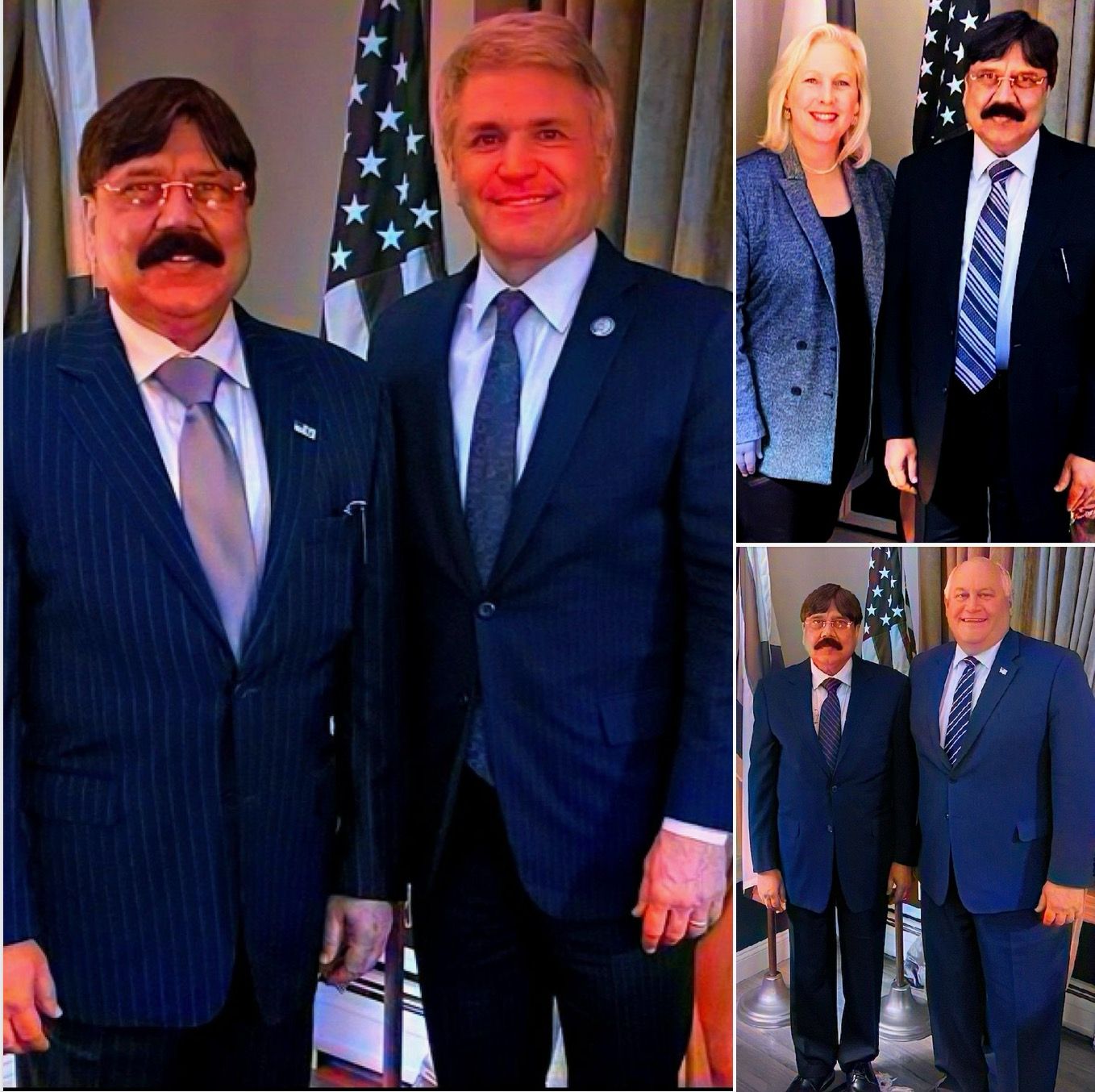
The Pakistan Policy Institute USA, under my leadership, is organizing a landmark U.S.-Pakistan Investors’ Forum in mid-August 2025. The event, to be held in Washington, D.C., will coincide with the visit of a high-level Pakistani parliamentary delegation and is expected to generate over $2 billion in promissory investment notes for Pakistan’s energy, tech, and manufacturing sectors. These funds represent the first wave of confidence that is expected to grow rapidly in the coming months.
With global manufacturers and investors seeking alternatives to China due to increasing barriers and U.S. disinvestment pressures, Pakistan is uniquely positioned to fill the vacuum—offering a blend of strategic geography, a skilled labor force, and now, tariff incentives.
From Battlefield Success to Boardroom Opportunity
Pakistan’s recent military success against India—though underrepresented in the global press—has sent a strong message of deterrence and readiness. The strategic discipline of Pakistan’s armed forces, especially under General Munir’s leadership, has turned into valuable diplomatic leverage. It is uncommon for military achievements to quickly turn into economic opportunities, but that is precisely what has happened.
The exclusive Trump-Munir meeting at the White House confirmed that Pakistan’s pitch for strategic partnership has been received—and reciprocated—at the highest level.
Pakistan Must Act Decisively
Now is the time for Pakistan’s civilian institutions and business community to seize this rare opening. With favorable U.S. tariffs, international investor interest, and military-backed strategic credibility, Pakistan can position itself as a new hub for global trade.
Immediate action is needed on:
• Streamlining regulations for foreign direct investment,
• Ensuring security of contracts and repatriation of profits,
• Promoting export-oriented zones under CPEC and beyond,
• Launching a global narrative strategy to attract business.
Conclusion: A New Era Begins
President Trump’s second-term trade policy punishes indecision and rewards clarity. India, despite its size, is now facing the consequences of geopolitical ambiguity. Pakistan, by contrast, is being recognized for its clear stance, strong military leadership, and willingness to align with responsible global trade norms.
As the United States seeks new allies for economic partnership, Pakistan must rise to the occasion—not with hesitation, but with vision, preparation, and resolve.
About the Author:
Dr. Gholam Mujtaba is a Pakistani American political leader, scholar, and senior Republican figure in the United States. He holds dual doctoral degrees—an MD and an Ed.D.—specializing in leadership studies, with a dissertation centered on Pakistani civil and military leadership. He is the Chairman of the Pakistan Policy Institute USA, a think tank that advocates for strong U.S.-Pakistan relations. Dr. Mujtaba also serves as a cabinet-level advisor to President Donald J. Trump and has led high-level political efforts promoting economic and strategic ties between Pakistan and the United States.
References:
1. AP News. “Pakistan and US reach trade agreement to develop oil reserves.” July 2025.
2. Tribune Pakistan. “Pakistan hit with 19pc tariff as Trump targets dozens of countries.” July 2025.
3. NDTV. “US finalizes 25% tariff on Indian goods.” July 30, 2025.
4. Avalara Tariff Tracker. “US Tariffs by Country – August 2025 Update.”
5. Economic Times. “India faces tariff blow, Pakistan gains in Trump’s new policy shift.” August 1, 2025.
6. The Guardian. “Trump announces new tariffs on dozens of countries.” July 31, 2025.
7. China Briefing. “U.S.-China tariff adjustments and disinvestment impact.” August 2025.
Advertisements