Iran Claims Drone Strike on US Base in Kuwait as Gulf Conflict Escalates
Tehran says it targeted US air defence and missile platforms at Ali Al Salem Air Base. Kuwait condemned the attacks, while Bahrain reported intercepting further strikes and an ADNOC vessel came under attack in the Strait of Hormuz.
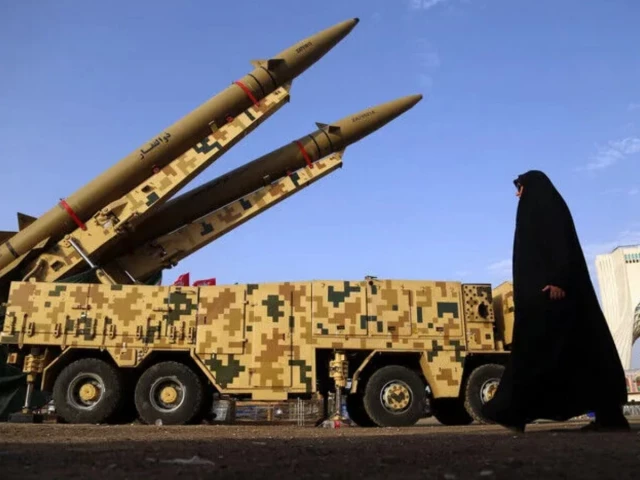
Iran claims drone strikes targeted US military installations at Kuwait’s Ali Al Salem Air Base.
Iran’s army said on Wednesday that its drones targeted US military installations at Ali Al Salem Air Base in Kuwait, amid renewed military exchanges across the Gulf.
Iranian state media reported that the operation targeted Patriot air defence systems and platforms used to launch drones and missiles.
“Early this morning, Iranian military drones struck Patriot air defence systems and US military drone and missile launch platforms at Ali Al Salem Air Base in Kuwait,” the Iranian army said.
The announcement followed a statement from Kuwait’s military that its air defences were engaging hostile drones early Wednesday. The military said any explosions heard in the area could result from interception operations.
However, Kuwait did not independently confirm Iran’s claim that its drones struck the US installations.
Kuwait Condemns Iranian Attacks
Kuwait strongly condemned what it described as repeated Iranian attacks, including the latest drone incident.
In a statement, the Foreign Ministry said the attacks violated Kuwait’s sovereignty and threatened its security and stability. It also described them as a serious breach of international law, the UN Charter and UN Security Council Resolution 2817.
The ministry warned that continued attacks could further destabilise the region and undermine diplomatic efforts.
Kuwait also reserved the right to take necessary measures to protect its territory, security and vital facilities.
It invoked Article 51 of the UN Charter, which recognises the right to individual and collective self-defence.
Bahrain Reports Interception of Iranian Attacks
Meanwhile, Bahrain’s Defence Force said its air defence systems intercepted several Iranian aerial attacks on Wednesday.
Xi and Putin Defend Trade and Challenge Western Pressure Ahead of Trump Meeting
The military did not disclose the number or type of projectiles involved. It also provided no details about possible casualties or damage.
Bahrain’s Interior Ministry issued two security alerts, urging residents to move to the nearest safe location. Authorities later issued all-clear announcements.
The developments followed an Iranian Revolutionary Guard Corps claim on Tuesday that it had launched drones at a US military radar system at Sheikh Isa Air Base in Bahrain.
Iran said the operation responded to alleged US drone incursions into its airspace. Bahrain and the United States said their defences intercepted the attack.
US Strikes Iranian Missile Site on Qeshm Island
The United States carried out an airstrike against an Iranian missile launch site on Qeshm Island on Tuesday.
Two US military officials told Fox News that American fighter aircraft used precision-guided munitions against an Islamic Revolutionary Guard Corps (IRGC) facility.
A US official described the operation as an act of self-defence. The official said it responded to IRGC aggression targeting American personnel and assets.
US Central Command said it remained vigilant and prepared to protect American forces across the region.
Iranian media also reported strikes on Qeshm Island. However, local officials said the attacks caused no damage to vital infrastructure or civilian areas.
ADNOC Vessel Attacked in Strait of Hormuz
Maritime security concerns also intensified after an ADNOC Logistics and Services vessel came under attack while transiting the Strait of Hormuz on Tuesday evening.
The UAE-based company confirmed the incident on Wednesday. It said one crew member remained missing and search and rescue operations were continuing.
All other crew members had been evacuated safely. Eleven people sustained injuries, and those requiring treatment were receiving medical care.
ADNOC L&S said its immediate priority was supporting the rescue operation and assisting the affected crew.
The company also stressed the need to protect seafarers and safeguard freedom of navigation and maritime security.
US Navy Reveals Use of Recoded Expired Munitions
Meanwhile, Acting US Navy Secretary Hung Cao disclosed that the Navy had used some expired munitions during its military campaign against Iran.
Speaking at his Senate confirmation hearing on Tuesday, Cao discussed pressure on weapons stockpiles and efforts to increase production.
He said the Navy had recoded some munitions classified as expired under its condition codes, allowing them to be used.
“For some of these munitions, we recoded them. And so we’re able to shoot off the expired munitions,” he told lawmakers.
Cao did not identify the specific weapons involved or say how many expired munitions the Navy had used.
He also said Tomahawk missile production had increased significantly. According to Cao, the Navy previously produced about 125 Tomahawks annually. Production had now risen to more than 60 a month.
He added that the Navy was working with industry to expand production of missile interceptors and other weapons.
The hearing highlighted concerns over the cost of the conflict, military readiness and pressure on US weapons supplies.
Iranian Lawmaker Warns of Response to Nuclear Attack
Iranian lawmaker Mohammad Reza Mohseni Sani warned that Tehran would respond at the same level if the United States launched a nuclear attack against the country.
Mohseni Sani, a member of parliament’s national security committee, made the remarks in an interview with Iranian news website Khabarfoori on Tuesday.
He said Iran had prepared for a possible military attack and argued that the actions of US President Donald Trump and Israeli Prime Minister Benjamin Netanyahu meant no scenario could be ruled out.
The lawmaker also expressed doubts about the prospects for an agreement with Washington. He said diplomacy would require a change in the US position and a recognition that continuing the war served no purpose.
His comments came amid continued tensions over the Strait of Hormuz, a vital route for international energy shipments.
Rubio Says No Imminent Threat to Washington
US Secretary of State Marco Rubio said he did not believe Washington faced an imminent threat following a CNN report about an alleged Iranian plot targeting the US capital.
Speaking to reporters in the Philippines on Wednesday, Rubio said American authorities monitored potential threats every day. However, he stressed that most intelligence leads did not prove credible.
“I don’t think there is any imminent threat,” Rubio said when asked about the possibility of an attack.
He added that the United States remained alert to threats against its citizens and national security.
Iran’s Foreign Ministry had rejected the reported allegations, describing them as baseless.
CENTCOM Chief Visits Israel Amid Rising Tensions
Separately, US Central Command chief Admiral Brad Cooper visited Israel on Tuesday for talks with senior military officials, according to Israeli media reports.
Cooper met Israeli Chief of Staff Lieutenant General Eyal Zamir and other military officials, Anadolu Agency reported.
The visit came amid renewed exchanges between US and Iranian forces and reports of preparations for possible further military operations.
Israeli media described the visit as part of regular military coordination between Washington and Tel Aviv. The reported discussions also came as regional security concerns continued to grow.
The latest developments underline the widening security risks across the Gulf, from military installations and airspace to commercial shipping routes. With diplomatic efforts facing difficulties, further attacks could place additional pressure on regional stability and international trade.