Xi and Putin Defend Trade and Challenge Western Pressure Ahead of Trump Meeting
Chinese and Russian leaders set out contrasting views on global trade and Western sanctions at the APEC summit, ahead of their first trilateral meeting with US President Donald Trump.
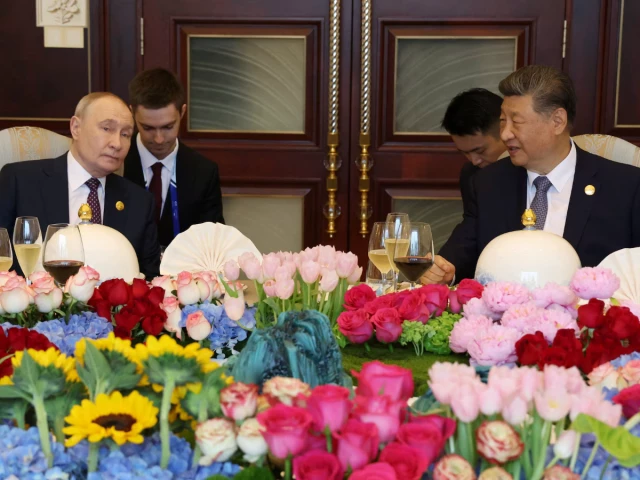
Xi Jinping and Vladimir Putin speak ahead of their planned trilateral meeting with Donald Trump.
Chinese President Xi Jinping on Wednesday defended free trade and multilateral cooperation, while Russian President Vladimir Putin criticised Western sanctions. Their remarks came ahead of a historic trilateral meeting with US President Donald Trump in Shenzhen.
The three leaders are scheduled to meet on Thursday, November 19, on the sidelines of the Asia-Pacific Economic Cooperation (APEC) summit. The talks could address major international issues, including trade, artificial intelligence, nuclear weapons and conflicts involving Ukraine and Iran. However, the precise agenda remains unclear.
The meeting has attracted comparisons with the 1945 Yalta Conference, where the United States, Britain and the Soviet Union discussed the post-Second World War order. Some observers fear that major powers could make decisions affecting smaller countries without adequately considering their interests.
Xi Calls for Open Trade and Multilateral Cooperation
Addressing business executives at the APEC gathering, Xi urged countries to support what he described as free and open trade.
“We must firmly uphold the rules-based multilateral trading system with the World Trade Organisation at its core, support free and open trade and investment, maintain the stability and smooth operation of global industrial and supply chains,” he said.
Xi’s remarks came amid renewed tensions between Washington and Beijing over trade and technology. The United States has announced further restrictions on China’s access to advanced artificial intelligence chips, including products from companies such as Nvidia. Beijing has pledged to respond.
Western trading partners have also raised concerns about China’s large trade surplus and industrial policies. They argue that state support for manufacturing gives Chinese companies an advantage and threatens industries and jobs elsewhere.
Beijing maintains that its economic model supports development and technological progress. Xi said China would continue investing in industry and new technologies while opening its markets further and lowering tariffs.
Khawaja Asif Hits Back at Bilawal, Questions PPP’s Record in Sindh
He also pledged to oppose protectionism and unilateralism. His message is likely to appeal to developing economies seeking greater access to international markets.
George Chen, partner and chair of digital practice at The Asia Group, said Xi’s remarks could strengthen Beijing’s efforts to present its technology strategy as an alternative to Washington’s approach.
Putin Criticises Western Sanctions
Putin followed Xi at the APEC event and criticised Western economic restrictions imposed on Russia following its invasion of Ukraine.
He described Western powers as “former hegemons” and argued that sanctions had failed to weaken the Russian economy.
“Experience has shown that the traditional tools of economic dominance and de facto coercion have largely run their course, having lost much of their intimidating power,” Putin said.
He added that sanctions, tariffs and export restrictions could still affect economic activity but could not stop growth or crush rival economies.
Putin’s remarks came amid continuing hostilities between Russia and Ukraine. The conflict has entered its fifth year, while Western governments continue to impose economic and financial restrictions on Moscow.
Xi and Putin Reaffirm Strategic Partnership
Earlier on Wednesday, Xi and Putin held bilateral talks in Shenzhen. Both leaders praised their countries’ cooperation and described their partnership as positive on the international stage.
They also pledged further efforts to advance what they called a multipolar world order.
Their meeting underscored the growing coordination between Beijing and Moscow as both countries navigate tensions with Western governments.
Trump Arrives Amid Regional and Global Tensions
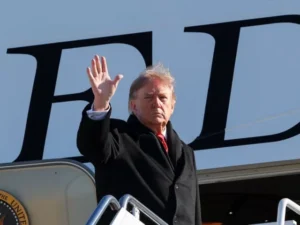
Trump was travelling to China from Manila, where he had met regional leaders and pledged to deepen defence cooperation with the Philippines.
Relations between Manila and Beijing remain strained over competing claims in the South China Sea. Trump also raised the possibility of meeting North Korean leader Kim Jong Un during his China visit, although no such meeting had been confirmed.
The planned trilateral gathering has also revived comparisons with the Yalta Conference. The Kremlin dismissed such comparisons as political speculation but acknowledged the meeting’s potential significance for international affairs.
Beijing, meanwhile, said the talks would contribute to world peace.
The summit is taking place amid wider security concerns in the Asia-Pacific region. Taiwan and Japan recently reported incursions by Russian aircraft into their airspace.
Putin Sees Potential in Trilateral Talks
Putin described the international environment as turbulent but argued that countries could resolve disagreements through dialogue.
“I therefore expect big potential benefit from the upcoming trilateral meeting between the leaders of Russia, China and the United States,” he said.
The meeting will bring together three leaders whose countries have major influence over global security, trade and technology. Its outcome could shape discussions on international cooperation and relations among the world’s leading powers.