Protecting sensitive data and ensuring secure, responsible information sharing are central to the effectiveness of the National Sex Offenders Register (NSOR).
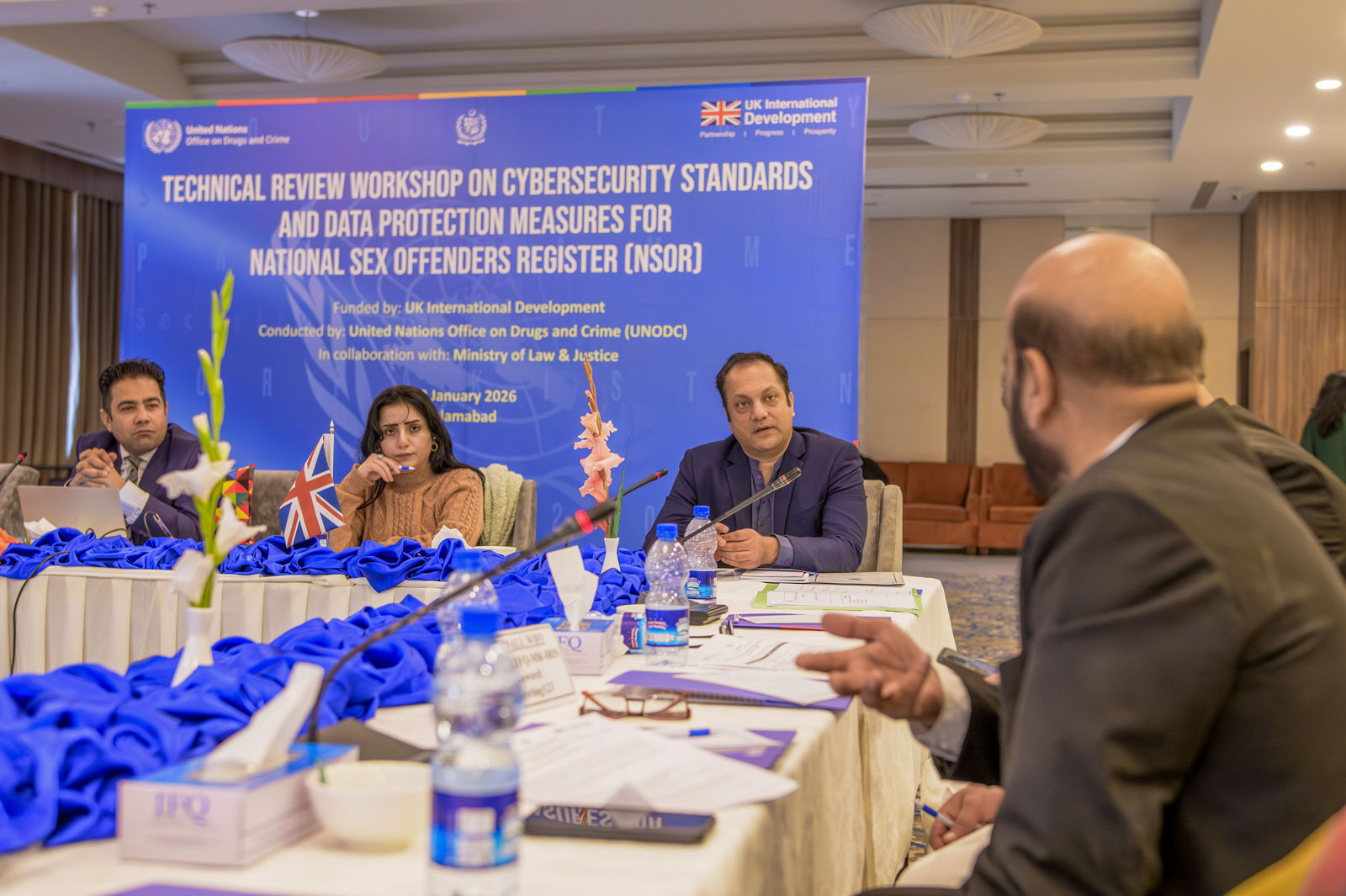
Protecting sensitive data and ensuring secure, responsible information sharing are central to the effectiveness of the National Sex Offenders Register (NSOR). With this objective, UNODC, in collaboration with the Ministry of Law and Justice and relevant justice-sector institutions, and with support from UK International Development, convened a Technical Review Workshop on Cybersecurity Standards and Data Protection Measures for NSOR as a core diagnostic activity under the project.
The workshop brought together technical and operational stakeholders from police, prosecution, prisons, NPB, NADRA, PITB, KPITB and other justice-sector institutions to assess NSOR’s current cybersecurity and data protection baseline, identify risks and gaps across technical, operational, and governance domains, and review alignment with applicable cybersecurity and privacy standards. Discussions focused on access controls, audit trails, encryption, identity and access management, incident response readiness, logging and traceability, and secure system integration touchpoints.

By strengthening cybersecurity practices and data protection safeguards, the initiative supports a more resilient and trustworthy National Sex Offenders Register, while generating evidence to inform remedial actions under Phase I and guide prioritized system strengthening and integration in Phase II, helping justice institutions act responsibly, protect survivor dignity, and enhance public safety across Pakistan.