
Traders firmly oppose demands for rupee devaluation.

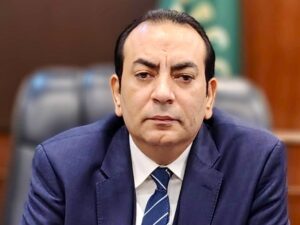
Islamabad (Jan-23-2026) : Business leader and former president of the Islamabad Chamber of Commerce, Shahid Rasheed Butt, has strongly rejected demands for further rupee devaluation, saying those offering such advice are not only unaware of ground realities but are also harming national interests.
He said the rupee has already been severely weakened, and ordinary citizens are bearing the burden of inflation. If the currency is further devalued, prices of essential goods will spiral out of control. He warned that this would fuel economic uncertainty and raise the risk of social unrest.
In a statement issued here, Shahid Rasheed Butt urged policymakers to focus on increasing production and exports, and reducing business costs, rather than playing with the value of the currency. He said electricity prices for industries in Pakistan are nearly double those in competing countries.
Taxes are excessive, interest rates are extremely high, and the law-and-order situation is poor, all of which are steadily worsening the business environment. As a result, capital, investors, and multinational companies are leaving the country.
He declares it unacceptable that all sectors are being sacrificed solely to satisfy influential IPP owners. He asserts that whenever any industry attempts recovery, government agencies promptly tighten control. Pakistan’s exports are stagnating at around 30 billion dollars, with textiles at about 19 billion. Despite the agricultural base, agricultural exports stubbornly remain under 5 billion, while other sectors also fail to exceed 5 billion combined.
Shahid Rasheed Butt demanded an end to shifting the burden of electricity theft and poor political decisions onto the industrial and domestic sectors. He stressed that genuine reforms are needed to address Pakistan’s economic problems, not cosmetic measures and repeated currency devaluation.
He stated that to restore confidence and revive investment, the government should ensure policy stability, conduct credible reforms, and enforce policies consistently. He specifically recommended predictable taxation, affordable energy, and accessible finance, and further urged the government to consult with industry leaders before making major economic decisions to avoid shocks to businesses.