Arts Council of Pakistan Karachi Celebrates Ahmed Faraz’s Legacy with Poetic tribute “ Aur Faraz Chahiyein KitniMohabbateinTujhe”
BY Manzoor Alam Balakoti.
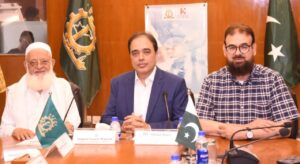
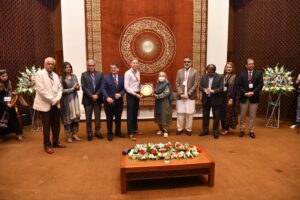
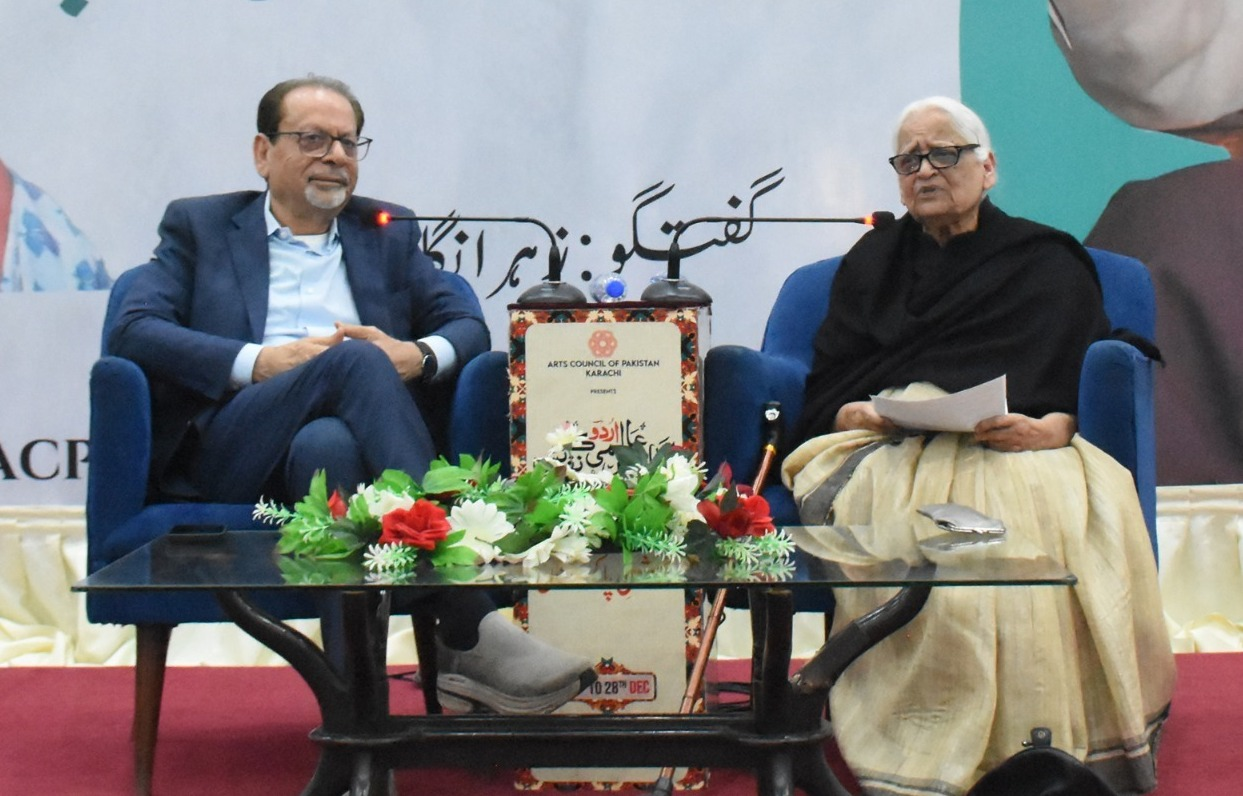
Karachi: Arts Council of Pakistan Karachi organized a session titled “Aur Faraz Chahiyein Kitni MohabbateinTujhe” at Haseena Moin Hall on the occasion of the birth anniversary of renowned poet Ahmed Faraz. Renowned poetess Zehra Nigah and President Arts Council Muhammad Ahmed Shah spoke in detail about poet Ahmed Faraz. Due to Zehra Nigah’s engaging style of conversation, the hall echoed with laughter. Poets and attendees present at the session recited Ahmed Faraz’s poetry, adding charm to the gathering. Joint Secretary Arts Council and renowned writer Noor-ul-Huda Shah, Professor Sahar Ansari, Ambareen Haseeb Amber, Shahid Rasam, Huma Mir, Aroosa Ali, Amjad Hussain Shah, Iqbal Latif, Shakeel Khan, Saadia Harim, along with a large number of personalities associated with art and literature, attended the event. A cake was also cut to mark Ahmed Faraz’s birth anniversary. The session began with the screening of a short reel based on Ahmed Faraz’s literary life. On this occasion, President Arts Council Muhammad Ahmed Shah, in his introductory remarks, said that Faraz’s father was a respected Persian poet. Ahmed Faraz was born on January 12, 1931, in Kohat, Khyber Pakhtunkhwa, Pakistan. His real name was Syed Ahmed Shah. When Ahmed Faraz began writing poetry, his name was Ahmed Shah Kohati, which later, on the advice of Faiz Ahmed Faiz, became Ahmed Faraz. He said that Persian greatly facilitated writers living in India, and that the soil of Punjab played an important role in the promotion of Urdu. He added that compared to UP and Hyderabad, many major poets of our era emerged from Punjab. Hundreds of Faraz’s ghazals became famous, which were sung by Mehdi Hassan and Noor Jehan. Faraz was a person deeply connected with his life and society. He started writing poetry at the age of fifteen or sixteen and was also associated with the Progressive Writers’ Movement. He said that Ahmed Faraz had a prominent role in the circumstances of this country. The more effective a poet’s voice is, the greater its impact remains. His love was like a flowing river. Ahmed Faraz was a poet who raised his voice boldly. Along with romantic poetry, his voice was equally strong in protest poetry. A sense of fluency is evident in Faraz’s work. He said that he has brought together all local languages and poets of Pakistan. Today is Faraz’s birth anniversary, and January 18 is Manto’s death anniversary. He said that every week or within ten days, such sessions will continue to remember great personalities associated with art and literature. Speaking during the special session, renowned poetess Zehra Nigah said that maintaining immense fame and dignity is a great achievement. The excellence of poetry and ghazal lies in the fact that it touches the heart, and the beauty of the ghazal is clearly visible in Faraz’s work. Faraz was a popular and excellent poet of his time. He had great respect and love for Faiz Sahib. Faraz was also a very good conversationalist. She said that the more one reads Faraz, the more one gains for oneself. Good poetry cannot exist without creating an impact. She added that Faraz had a lot of inspiration in his life, which motivated him to continue writing. Faraz’s poetry was popular among the masses, and she had seen many highly respected individuals praise Faraz’s verses. Ahmed Faraz played a significant role in enhancing the brilliance of Urdu poetry. She said that various kinds of revolutions occur in the world, but the revolution of the mind comes first. She further said that the great treasures of Urdu poetry have emerged through the path of love. Faraz’s love, even if temporary, was refined. She said that eminent personalities appreciated Faraz’s poetry. A poet is very fortunate who gains fame after leaving this world, and we should continue to remember Faraz.ZehraNigah said it was her good fortune that she met many great personalities in her life, and that Faraz was the first to recite poetry to her. She added that it is very rare for a poet’s future to be indicated by their first collection; Allama Iqbal was one such poet whose Bang-e-Dra became his reference. She also remarked that among female singers, she finds Mehnaaz’s voice to be refined.