
Pakistan Horticulture Development and Export Company (PHDEC) convened an awareness meeting at the Quetta Chamber of Commerce and Industries (QCCI)
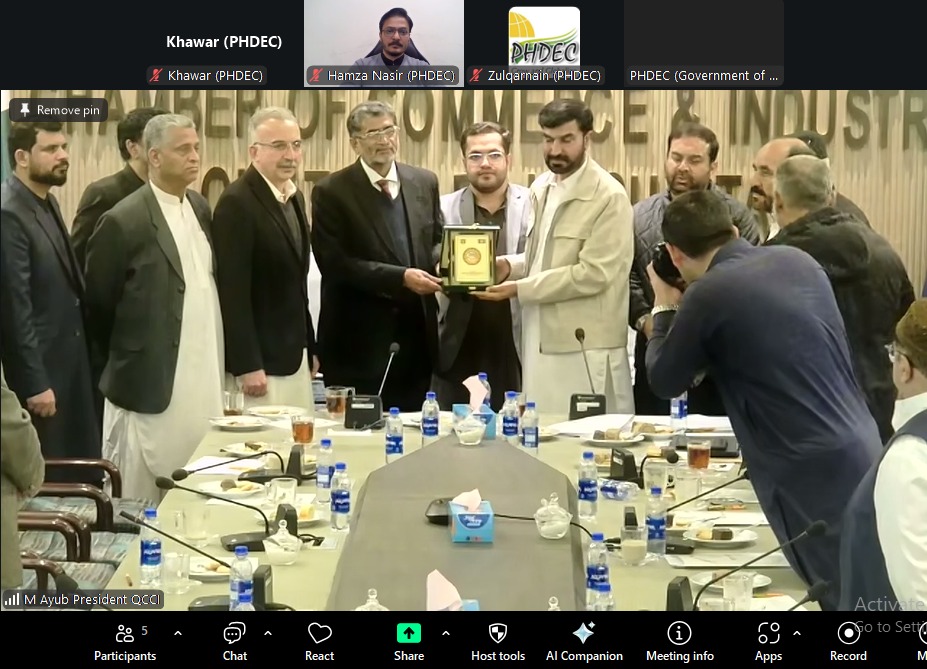
Pakistan Horticulture Development and Export Company (PHDEC) convened an awareness meeting at the Quetta Chamber of Commerce and Industries (QCCI) to brief stakeholders on PHDEC’s Food Safety Certification Project, an initiative aimed at enabling Pakistani horticulture products to access high-end international markets.
The session was opened by the Secretary of the Trade Development Authority of Pakistan (TDAP), Mr. Sheryar Taj, who welcomed the participants and highlighted PHDEC’s recently developed three-year work plan. He shared that the plan was formulated through extensive consultations with provincial governments, academia, and research institutions. Emphasizing Balochistan’s strategic importance as the “fruit basket of Pakistan,” he noted the province’s vast potential for horticulture exports and reaffirmed PHDEC’s commitment to working closely with local stakeholders to collectively improve productivity, quality, and export competitiveness.
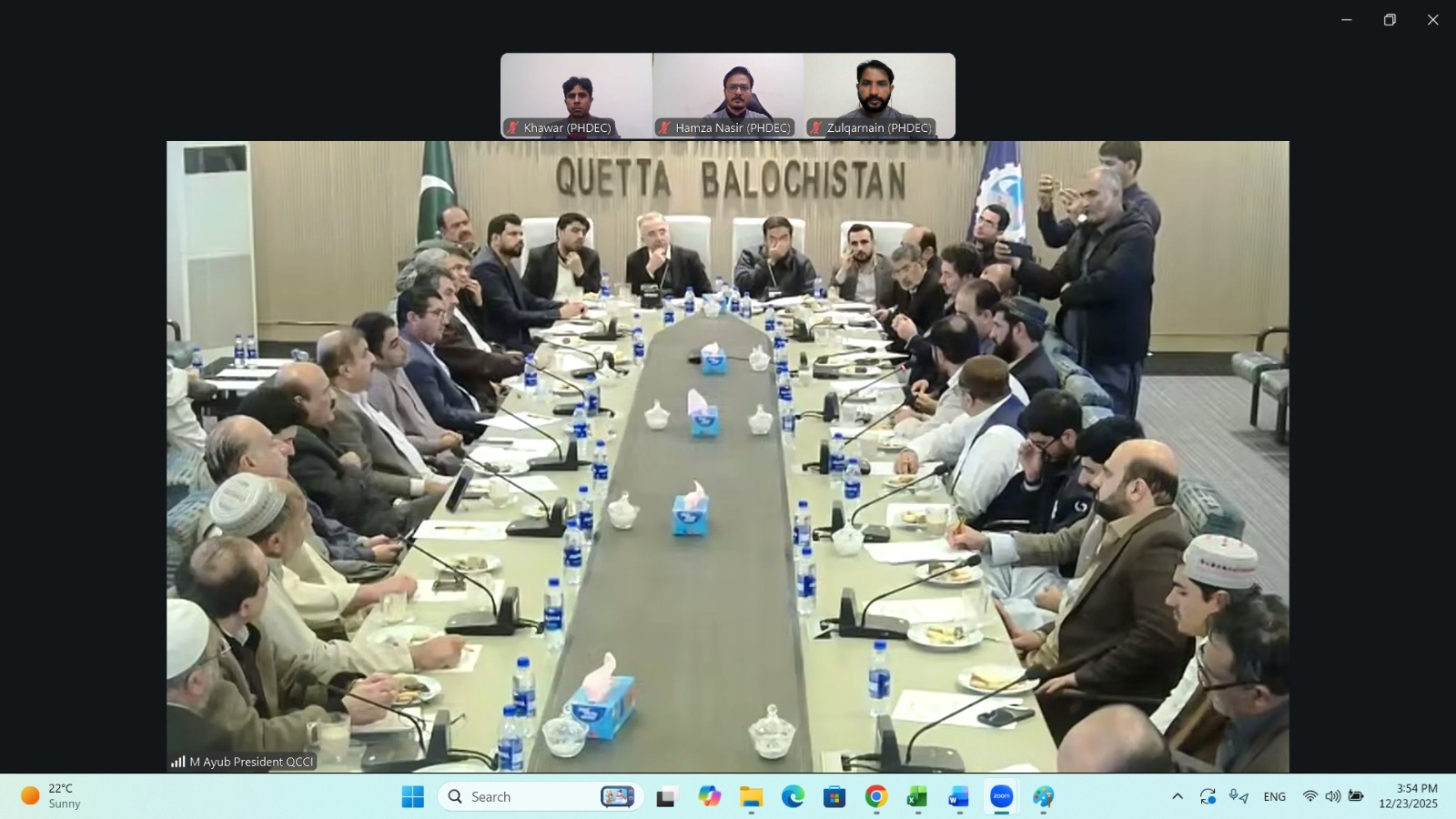
Mr. Taj further informed the participants that PHDEC is in the process of establishing its first-ever regional office in Quetta. Under this initiative, two horticulture experts will be recruited to strengthen linkages with local stakeholders and to support the Balochistan Agriculture Department in improving product quality, facilitating technology transfer, and enhancing yields in line with international best practices. He also outlined PHDEC’s strategy to promote Pakistani olive products—particularly olive oil—in international markets, including certification requirements and market targeting. He explained that the first phase focuses on reducing Pakistan’s dependence on imported edible oils by boosting domestic olive oil production, followed by a second phase targeting premium international markets. Concluding his remarks, he announced that PHDEC, TDAP, and the Balochistan Agriculture Department are jointly planning a Balochistan Horticulture Expo to promote the province’s horticulture produce at national and international levels.
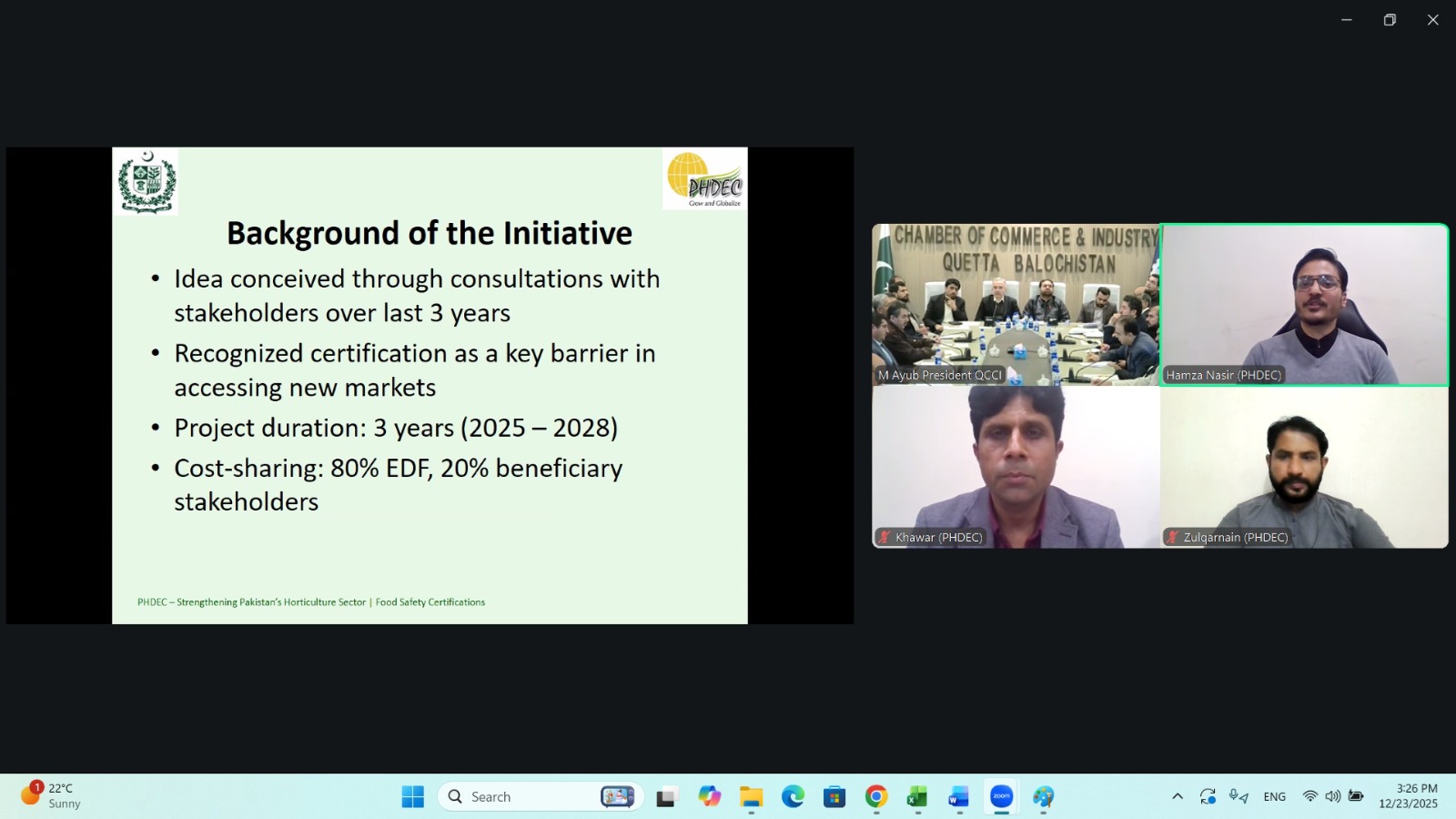
Following this, Mr. Hamza Nasir delivered a comprehensive presentation on PHDEC’s Food Safety Certification Project, aimed at addressing key barriers to entry into high-end international markets. He shared that PHDEC’s extensive stakeholder engagements identified food safety certifications as the primary constraint faced by growers and exporters. Highlighting the importance of traceability and quality assurance in global horticulture trade, he explained that PHDEC has designed a structured certification support program on an 80:20 cost-sharing basis. Under this initiative, internationally recognized certifications such as GlobalG.A.P., HACCP, and ISO 22000 will be facilitated for horticulture growers and exporters. He also presented PHDEC’s branding and market placement strategy for certified produce, including its positioning on the shelves of leading domestic retail chains such as Imtiaz and Al-Fatah.
Dr. Muhammad Azeem, in his remarks, highlighted that the private sector has already begun making significant investments in value chain infrastructure, including cold storage facilities. He noted notable investments by the Pakistan Green Development Corporation, an arm of the Special Investment Facilitation Council (SIFC), in key horticulture hubs such as Panjgur, Loralai, and Quetta, focusing on priority products including dates, olives, grapes, and apples.
The floor was then opened for discussion, during which participants highly appreciated PHDEC’s initiative and termed it a timely and much-needed intervention for the modernization of Balochistan’s horticulture sector. Participants also shared that a proposal for establishing 30 olive oil extraction units had recently been submitted to the EDF and was awaiting consideration. In response, Mr. Sheryar Taj advised stakeholders to explore alternative financing avenues, including the Export-Import Bank of Pakistan (EXIM Bank), and assured that a dedicated awareness session would be organized in collaboration with EXIM Bank to guide stakeholders on accessing financial facilities for horticulture sector projects. Dr. Azeem, while fully endorsing the importance and timeliness of the proposed establishment of 30 olive oil extraction units, emphasized that incorporating a few strategic refinements would further strengthen the proposal and enhance its overall impact. He recalled that during earlier review deliberations, it was recommended to leverage the digital database recently developed by TDAP on olive plantations in Balochistan. Effective use of this database would allow for evidence-based planning, including an accurate stocktaking of existing extraction facilities and the precise identification of priority locations where additional units are most needed. He further stressed that, for the project to deliver sustainable outcomes, the development of a practical and well-defined business model should be accorded priority, clearly outlining the operational responsibilities of service providers. Such an approach would not only improve project viability but also increase its attractiveness to alternative financing sources. PHDEC, he reiterated, remains fully committed to playing a facilitative and supporting role at every stage of this important initiative.
During the discussion, participants further highlighted that, in the current era of digital media, PHDEC should actively engage vloggers, content creators, and digital influencers to promote Pakistani olive oil, in line with international marketing practices. Responding to this suggestion, the Secretary TDAP informed the participants that PHDEC has recently inaugurated the first-ever public sector podcast studio, aimed at leveraging digital media tools for information sharing and knowledge dissemination across the horticulture value chain. He added that the podcast studio was inaugurated by the Federal Minister for Commerce, Jam Kamal Khan, and will serve as a dedicated platform to promote Pakistani horticulture products, success stories, and export-oriented initiatives—particularly olive oil—among domestic and international audiences.
Representatives of QCCI also suggested that the proposed Balochistan Horticulture Expo should include trade missions from Afghanistan, Iran, and China, along with structured B2B interactions to facilitate meaningful engagement between international buyers and Pakistan’s horticulture stakeholders.
Way Forward
• Expedite the establishment of PHDEC’s regional office in Quetta and deployment of horticulture experts to strengthen coordination with growers, exporters, QCCI, and the Balochistan Agriculture Department.
• Initiate the implementation of the 80:20 cost-sharing certification program (GlobalG.A.P., HACCP, ISO 22000) for priority horticulture clusters in Balochistan, with a focus on olives, dates, apples, grapes, and other export-oriented products.
• Strengthen collaboration with the Pakistan Green Development Corporation and private investors to further develop cold storage, processing, and logistics infrastructure in key horticulture hubs including Panjgur, Loralai, and Quetta.
• Implement a phased olive oil development strategy—first to reduce import dependency through increased local production, followed by targeted exports to premium international markets supported by certifications and branding.
• Utilize PHDEC’s newly established public sector podcast studio and engage vloggers, digital influencers, and content creators to promote Pakistani horticulture products, particularly olive oil, through modern digital media platforms.
• Organize dedicated awareness and facilitation sessions with EXIM Bank and other financial institutions to guide growers and entrepreneurs on accessing financing for processing, certification, and value-addition projects.
• Plan and organize the proposed Balochistan Horticulture Expo in collaboration with TDAP and the Balochistan Agriculture Department, ensuring participation of international trade missions from Afghanistan, Iran, and China, alongside structured B2B engagements.
• Continue targeted training and awareness sessions for growers and exporters on quality standards, traceability, post-harvest management, and export compliance to enhance competitiveness in high-end international markets.