Industry Support Essential to Rehabilitate Prisoners into Respectable Citizens, IG Prisons
Task Force Proposed with KATI–Industry Partnership to Provide Employment Opportunities for
Prisoners Inside Jails: Fida Hussain Mastoi.
Karachi: Inspector General of Prisons Sindh, Fida Hussain Mastoi, has stressed that prisons should not
function merely as centers of punishment but must play a meaningful role in the rehabilitation, training
and reintegration of inmates as productive members of society. He said the lack of social acceptance
after release often pushes former prisoners back into crime, making rehabilitation a key factor in
reducing repeat offences.
Speaking during a visit to the Korangi Association of Trade and Industry (KATI), the IG Prisons said the
Sindh Prisons Department was introducing modern vocational and skills development programs for
inmates. However, he emphasized that the success of these initiatives depends on active and sustained
cooperation from the industrial sector.
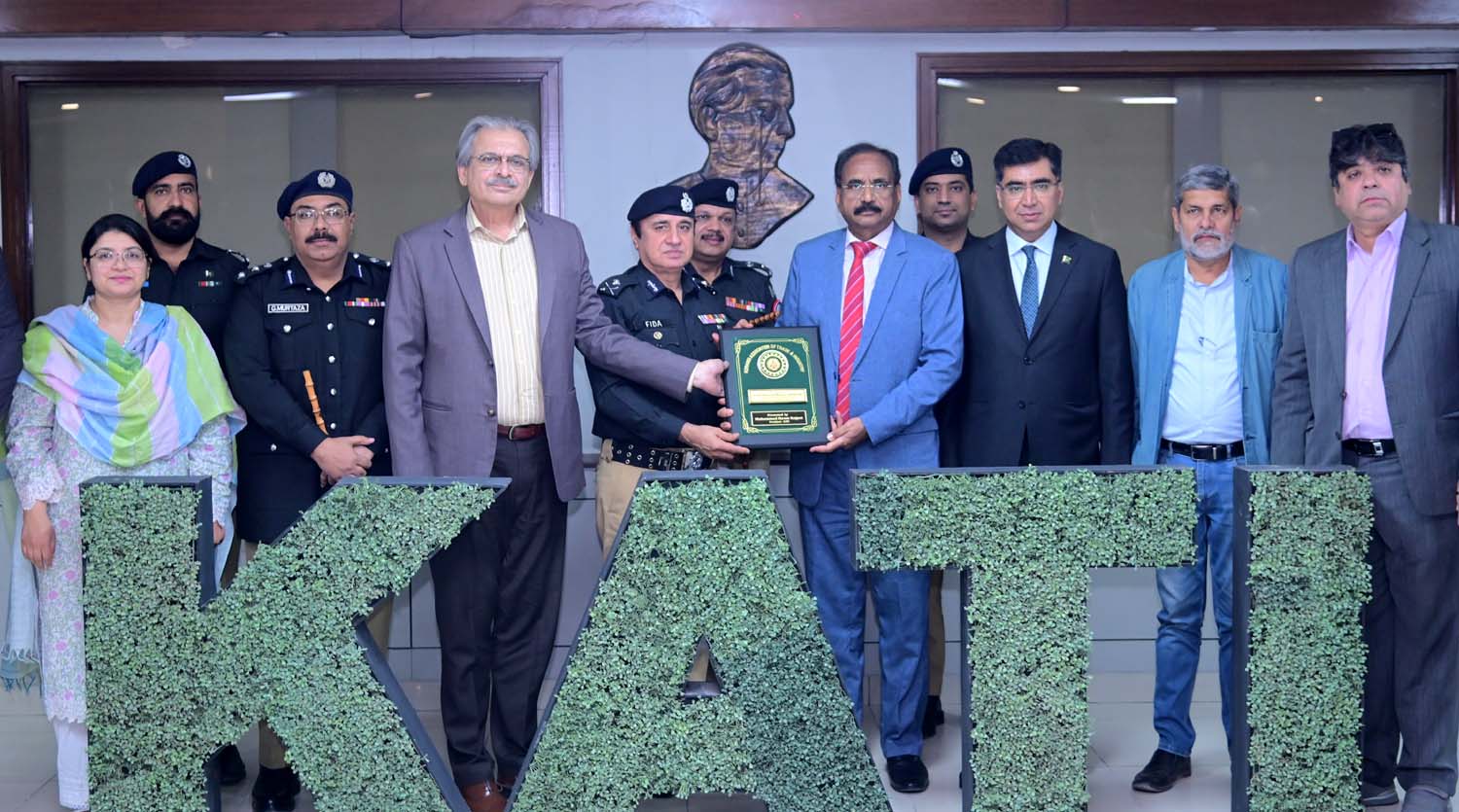
KATI President Muhammad Ikram Rajput and Deputy Patron-in-Chief Zubair Chhaya
present a shield to IG Prisons Sindh Fida Hussain Mastoi. Senior Vice President Zahid Hameed, Maheen
Salman, Aamir Yousuf, Shahzad Mubeen, DIG Muhammad Aslam Malik, SSP Ghulam Murtaza Sheikh and
SP Faheem Anwar Memon are also present.
The meeting was attended by KATI President Muhammad Ikram Rajput, Deputy Patron-in-Chief Zubair
Chhaya, Senior Vice President Zahid Hameed, Chairman Standing Committee on Law and Order Danish
Khan, former chairman Farhan-ur-Rehman, DIG Prisons Karachi Region Muhammad Aslam Malik, SSP
Central Jail Karachi Ghulam Murtaza Sheikh, SP District Jail Malir Karachi Faheem Anwar Memon, and
others.
IG Mastoi informed participants that Sindh’s prisons currently house around 28,000 inmates, exceeding
capacity by more than 12,400 prisoners. Despite severe overcrowding, he said, the department was
working on multiple reform initiatives aimed at transforming inmates into responsible citizens.
He proposed the formation of a dedicated task force under the supervision of a DIG, comprising
representatives from KATI and experts from various industrial sectors. The task force would work on
providing modern machinery and equipment inside prisons, imparting market-relevant skills, and
facilitating industrial orders and projects for inmates.
“If industries provide work orders—such as from textile mills, factories or other enterprises—prisoners
can function as an organized workforce while serving their sentences,” he said. “After release, these
trained individuals can be absorbed into the same industries, enabling them to earn a dignified
livelihood. This will not only help reduce crime but also provide industries with a trained workforce.”
Earlier, KATI President Muhammad Ikram Rajput said prisons are a sensitive yet vital institution where
offenders should be given opportunities for reform alongside punishment. He stressed the importance
of mental, moral and social rehabilitation of inmates so they can reintegrate into society after release.
He called for the establishment of basic education, adult literacy and vocational training centres within
prisons, noting that education broadens awareness and prepares inmates for a better future. Skills such
as tailoring, embroidery, carpentry, electrical work, computer training and other trades, he said, can
make prisoners self-reliant and help keep them away from crime after release. He also emphasised
religious and moral education, positive activities, and legal aid for inmates who remain incarcerated due
to financial constraints or lack of legal awareness.
Deputy Patron-in-Chief Zubair Chhaya welcomed the initiative, acknowledging that former prisoners
often struggle to find employment after release. However, he noted that even university graduates
currently face job shortages. While assuring full cooperation from the industrial community, he stressed
that such initiatives must be long-term and sustainable.
“Past experience shows that projects often stall with a change in leadership,” he said, adding that strong
government backing and a comprehensive policy framework are essential to ensure continuity and
effectiveness of the proposed task force.
Chairman Standing Committee Danish Khan said positive steps were already being taken for inmate
training, and the business community had consistently supported rehabilitation initiatives. He added
that KATI and other business groups had also voluntarily helped secure bail for inmates involved in
minor offences who remained in jail due to financial hardship.
It was also proposed during the meeting that prisoners be provided vocational training in collaboration
with NGOs and vocational institutions to diversify skill sets and expand employment opportunities upon
release.