Conference at IoBM Explores the Future of Education in Pakistan
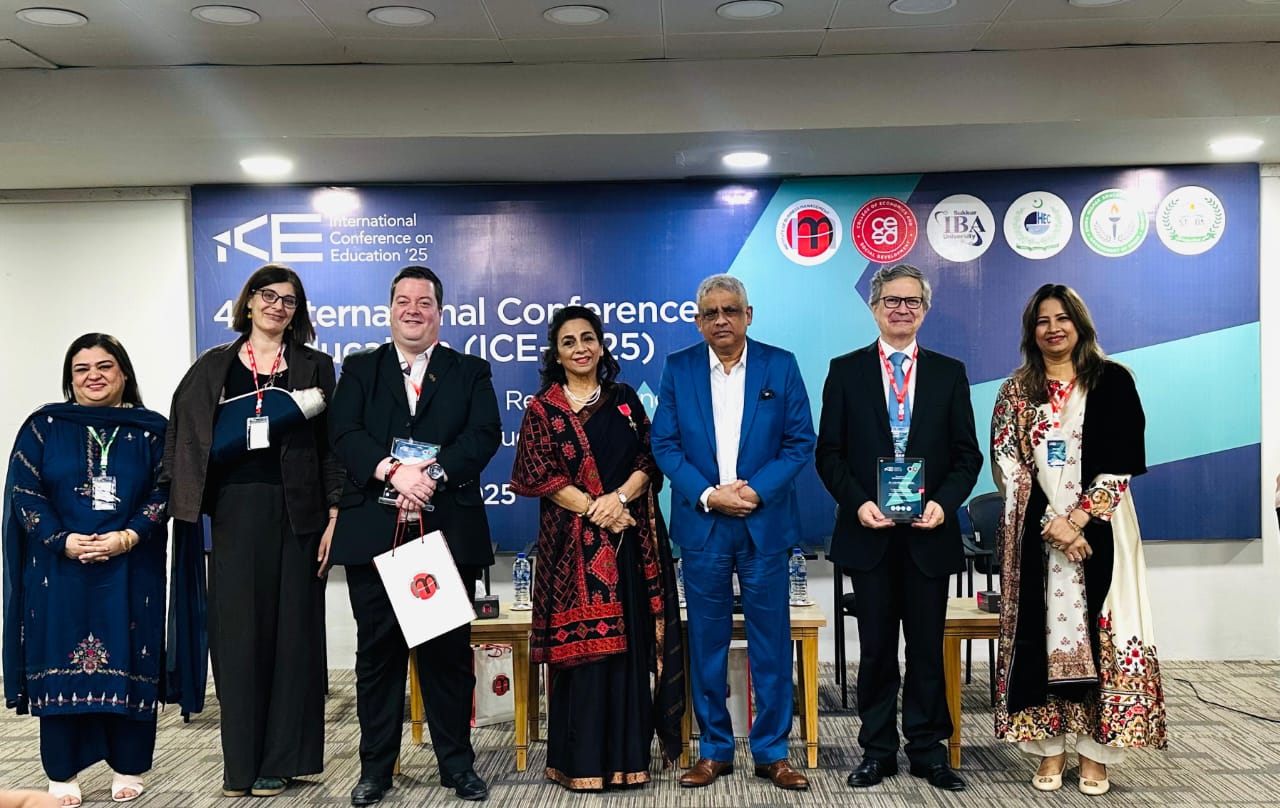
Karachi – The Institute of Business Management (IoBM) hosted the 4th International Conference on Education (ICE 2025) on December 13–14, 2025. Centered on the theme “Integrating Curriculum, Research and Lifelong Learning in Education,” the conference brought together academics, practitioners, scholars, and education administrators to deliberate on the evolving landscape of education in Pakistan. ICE 2025 was organized by the Department of Education, College of Economics and Social Development (CESD), IoBM.
Conference Patron and President of IoBM, Mr. Talib Karim, underscored the importance of adapting teaching methodologies to align with the learning styles and perspectives of Generation Z, while emphasizing the need for focused and continuous faculty development. In her welcome address, Dr. Nadia Ayub, Dean of CESD, highlighted the necessity of a holistic education system that equips learners with the skills and competencies required to meet future societal and economic challenges. The keynote address was delivered by Dr. Luís Miguel Cardoso, Professor at the Polytechnic University of Portugal, who spoke on the growing significance of AI literacy and digital skills in contemporary education.
The Chief Guest, Ms. Durdana Ansari, former producer at the BBC, noted that education plays a vital role in preparing students to effectively address real-world challenges. Dr. Sussane Beiweis, Assistant Professor at Habib University, emphasized the value of interactive learning environments that encourage inquiry, dialogue, and active participation from both faculty and students. Dr. Iain Keith Riley, Head of School at TNS Beaconhouse, Pakistan, highlighted the critical role of teachers in building meaningful connections with students to better understand their perspectives and challenges.
Panel discussions and workshops conducted over the two-day conference focused on introducing innovative and inclusive curriculum models, promoting ethical research practices, and leveraging AI-driven insights to inform education policy. The conference concluded with a strong call for enhanced collaboration, knowledge sharing, and actionable recommendations to drive sustainable educational reforms.