
Vision 2030: Traffic System to Be Run Through Automation Instead of Traffic Police, Pir Muhammad Shah
Proposal to Establish Karachi Traffic Management Company to Upgrade Road Infrastructure Through
Challan Revenue, DIG Traffic
E-Challan Has Significantly Improved Traffic Law Enforcement, Fine Amount Should Be Reduced and
Infrastructure Improved, KATI President Muhammad Ikram Rajput
Equal Action Against Tinted Glasses; New System Has Some Flaws but Will Improve Soon, Deputy
Patron-in-Chief Zubair Chhaya
Karachi: Deputy Inspector General (Traffic) Pir Muhammad Shah said that under the government’s
Vision 2030, Karachi’s traffic system will eventually be managed entirely through automation, with no
traffic police personnel deployed on major roads. He was speaking at a meeting with industrialists at the
Korangi Association of Trade and Industry (KATI).
The DIG Traffic said the introduction of the e-challan system has already brought visible improvements
in traffic discipline, with increased use of helmets and seat belts and greater compliance with traffic
signals. He disclosed that in the past month, 58 per cent of e-challans were issued to luxury vehicles,
while motorcycles, which make up nearly 60 per cent of the city’s traffic accounted for only 23 per cent
of violations.
Rejecting the perception that fines in Sindh are higher than in Lahore, he said the motorcycle fine in
Lahore is Rs. 2,000 while in Sindh it is Rs. 2,500. The standard fine in Sindh is Rs. 5,000, however a 50 per
cent discount is allowed if paid within 14 days, a facility not available in Lahore.
Pir Muhammad Shah announced that from Monday a chatbot service would be launched to provide
citizens with complete information regarding e-challans and other traffic-related matters. He added that
a proposal has been submitted to the government for the establishment of a Karachi Traffic
Management Company (KTMC), which would receive a share of challan revenue to fund improvements
in road infrastructure.
He informed that 1,076 cameras have so far been installed across the city, with a long-term plan to
increase the number to 12,000, while Karachi currently requires at least 400 traffic signals. He also
revealed that separate lists are being compiled for vehicles without proper registration records, and a
pool of around 2,000 blacklisted vehicles has already been prepared. Citizens concealing or removing
number plates to avoid e-challans, he warned, are committing a punishable offence.
The DIG further stated that legislation requiring trackers in heavy vehicles has now been enforced, and
automation is also being introduced in the transport system. While the Sindh Assembly is in session and
fines may be revised, he maintained that heavy penalties, as practiced in developed countries, remain
key to effective enforcement of traffic laws.
Speaking on the occasion, KATI President Muhammad Ikram Rajput said that the implementation of e-
challans has significantly improved road discipline, with widespread compliance with helmet and seat
belt use and reduced signal violations. He noted a visible decline in traffic accidents since the system’s
introduction and said it has also created difficulties for criminal elements.
He stressed that the amount of e-challan fines remains very high and should be reduced. He also called
for the rapid completion of the Safe City Project in Karachi and expressed concern that deputation of
traffic personnel to other police duties could create a manpower shortage on roads.
Deputy Patron-in-Chief Zubair Chhaya said the absence of a mass transit system has contributed to
traffic chaos in the city and demanded across-the-board enforcement against tinted windows. He also
highlighted the urgent need to curb violations by dumpers and heavy vehicles, adding that while the e-
challan initiative is commendable, it is a new system with shortcomings that are expected to improve
with time. He said the business community wants a stronger traffic management framework, removal of
encroachments and an increased number of signals so that Karachi can operate as a properly organized
metropolitan city and leave a positive impression on foreign visitors.
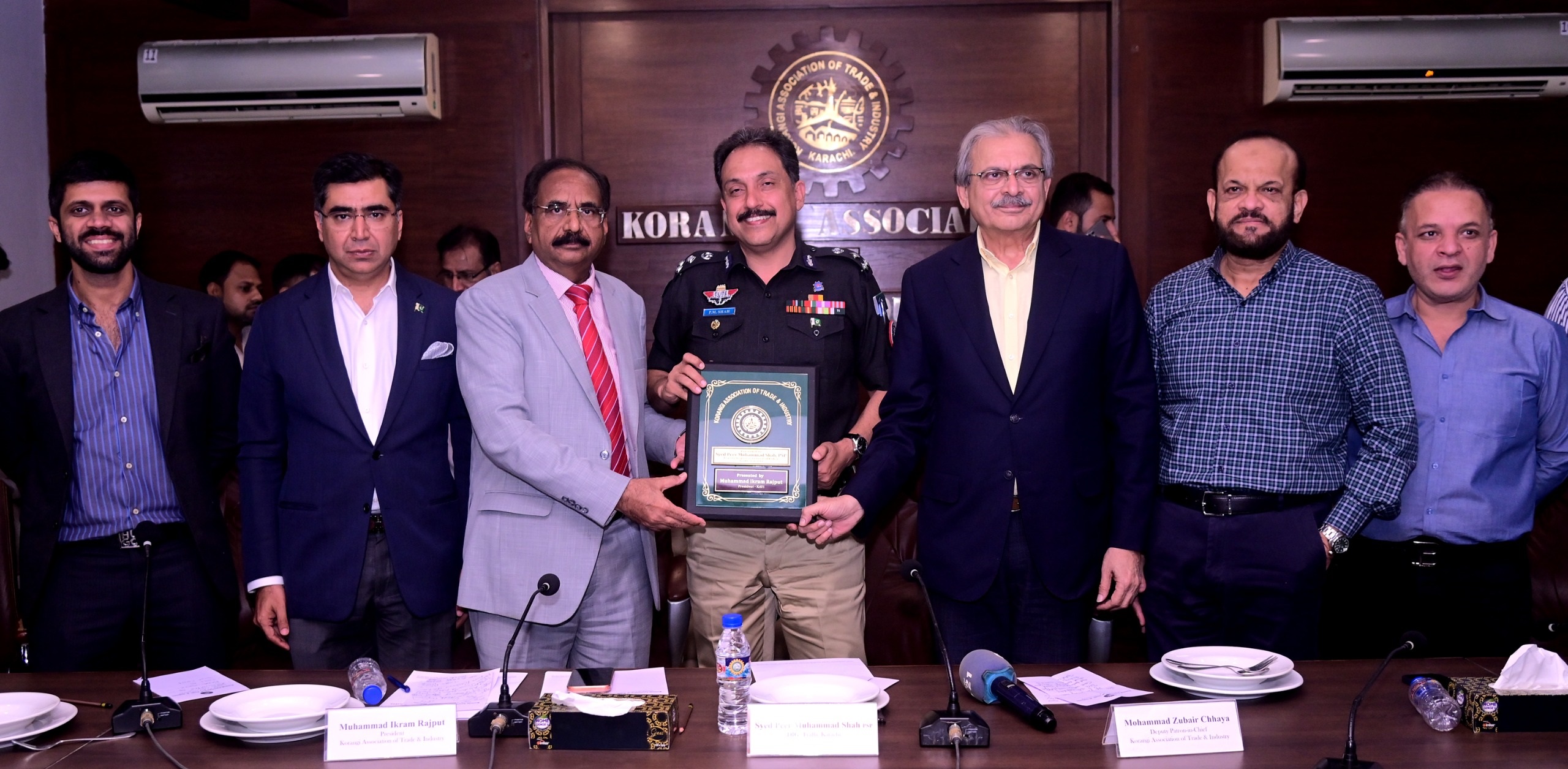
Photo Caption: KATI President Muhammad Ikram Rajput and Deputy Patron-in-Chief Zubair Chhaya
presenting a shield to DIG Traffic Pir Muhammad Shah. Senior Vice President Zahid Hamid, Vice
President Muhammad Talha, Johar Qandhari and Khurram Gulzar are also present.