Qaiser Ahmed Sheikh: PML-N Supports Privatization, PPP Opposes It
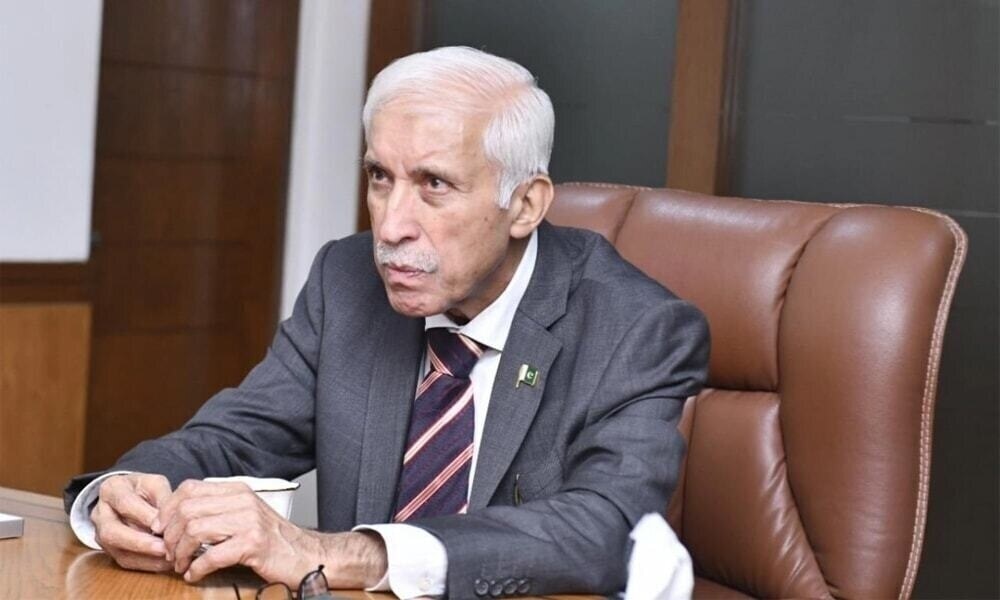
Karachi – Federal Minister for Investment and Chairman of the Board of Investment, Qaiser Ahmed Sheikh, acknowledged policy differences among government allied parties, stating that while the Pakistan Muslim League-Nawaz (PML-N) supports privatization, its ally, the Pakistan Peoples Party (PPP), is opposed to it. Qaiser Ahmed Sheikh revealed that PPP is against the privatization of state-owned enterprises, and because of PPP’s opposition, the privatization process is not progressing. He noted that PPP’s opposition to privatization is not a new issue, but PML-N has always had a policy in favor of privatization. Sheikh stated that negotiations regarding privatization continue with PPP, but it is a reality that the current government cannot survive without PPP’s support.
In his speech at the 8th Pakistan International Expo and Tourism Investment Opportunities Conference, organized by the Pakistan Association of Exhibition Industry (PAEI) at a local hotel, he mentioned that PML-N is trying to convince PPP to agree to privatization, but PPP continues to oppose it. He warned that if PML-N fails to resolve negotiations smoothly, the current government could suffer.
Among those who spoke at the conference were Founder Chairman of PAEI Khurshid Birlas, Senior Vice President of FPCCI Saqib Fayaz Mago, Chairman of Abad Hassan Bakhshi, Senior Patron of Abad Mohsin Sheikhani, President of Islamabad Chamber Sardar Tahir Mehmood, Vice President of Rawalpindi Chamber of Commerce Fahad Birlas, Chairman of Pakistan Hindu Council and MNA Dr. Ramesh Kumar Vankwani, and others.
Federal Minister Qaiser Ahmed Sheikh further stated that all government enterprises are incurring losses and need privatization. He emphasized that policy continuity is not possible unless the ruling party gets a clear mandate. He also disclosed that the Board of Investment holds 6,000 acres of land at Port Qasim, which will be offered for business activities at a rate of 7 million rupees per acre. He also shared that Pakistan played a key role in facilitating diplomatic relations between the United States and China.
The Minister candidly acknowledged corruption issues in the country, stating that Pakistan’s defense budget of 10 billion dollars is very low compared to the much larger defense budgets of its neighboring country. He urged all political parties to prioritize the elimination of poverty, similar to how China lifted 700 million people out of poverty.
In his welcome speech, PAEI Chairman Fahad Birlas highlighted the organization’s goal of increasing exports and investments, and called for a single-digit policy interest rate. PAEI’s Founder Chairman Khurshid Birlas stressed the need to focus on religious tourism and announced that they would be working to restore trust among overseas Pakistanis in viable investment projects in Riyadh, the UK, and the US.
Chairman of the Association of Builders and Developers (Abad), Hassan Bakhshi, expressed concern over the outflow of capital, revealing that between 15 to 20 billion dollars have been transferred from Karachi to the UAE, and due to unfriendly policies, more capital is leaving the country. He also criticized the contradiction that non-filers can invest globally, yet face restrictions in Pakistan. He called for rationalizing policies and urged that the Federal Board of Revenue (FBR) stop assuming all business people are tax evaders. Bakhshi added that both Prime Minister and Army Chief Field Marshal General Asim Munir support the development of the construction industry, but the government must facilitate this sector so that further investment does not leave the country.
Abad Senior Patron Mohsin Sheikhani argued that the construction industry cannot operate with a 7% tax burden and called on the government to raise the housing finance limits from the current 2 million rupees (5%) and 3.5 million rupees (8%) to 10 million and 15 million rupees. He also proposed a 20-year economic policy framework, which he believes would restore business community confidence, and urged that builders and developers be included in policy-making.
Senior Vice President of the Federation of Pakistan Chambers of Commerce and Industry (FPCCI) Saqib Fayaz Mago revealed that an MoU has been signed with an ASEAN delegation, under which each ASEAN country will nominate 100 tourists. He also pointed out that no new five-star hotels have been built in Karachi in the past 40 years and urged the business community to explore opportunities in the hospitality sector and develop facilities along the coastal belt to attract foreign tourists.
Sardar Tahir Mahmood, President of the Islamabad Chamber of Commerce and Industry (ICCI), highlighted the severe housing shortage in Pakistan, stating that the country needs 2 million new homes, with 1.5 million more required each year. He predicted that by 2030, 40% of the population will migrate to large cities, necessitating large-scale residential development.
Dr. Ramesh Kumar, Chairman of the Pakistan Hindu Council, emphasized the need for a realistic analysis of issues and solutions, stressing that a spirit of service to the country is vital for Pakistan’s progress.