
Federal Minister for Finance, Revenue, and Economic Affairs Mr. Aurangzeb Visits Karachi Chamber of Commerce and Industry (KCCI)

KARACHI, November 5 — Federal Minister for Finance, Revenue, and Economic Affairs Mr. Aurangzeb visited the Karachi Chamber of Commerce and Industry (KCCI) where he engaged in a detailed discussion with key business leaders, exporters, and representatives from the private sector.
The event was attended by prominent members of KCCI, including President Zubair Motiwala, members of the Executive Committee, and representatives of the private sector. In his opening remarks, President KCCI welcomed the Minister, appreciating the government’s recent economic steps, including the improvement in Pakistan’s economic outlook, remittances crossing the USD 36 billion mark, resolution of the LCs issue, and the positive momentum seen in the Pakistan Stock Exchange (PSX). However, he also highlighted concerns over stringent policies leading to the closure of vital industries such as oil, ghee, and tea, and pointed out that the recent 1% tax on rental property has led to a flight of capital towards Dubai and other countries.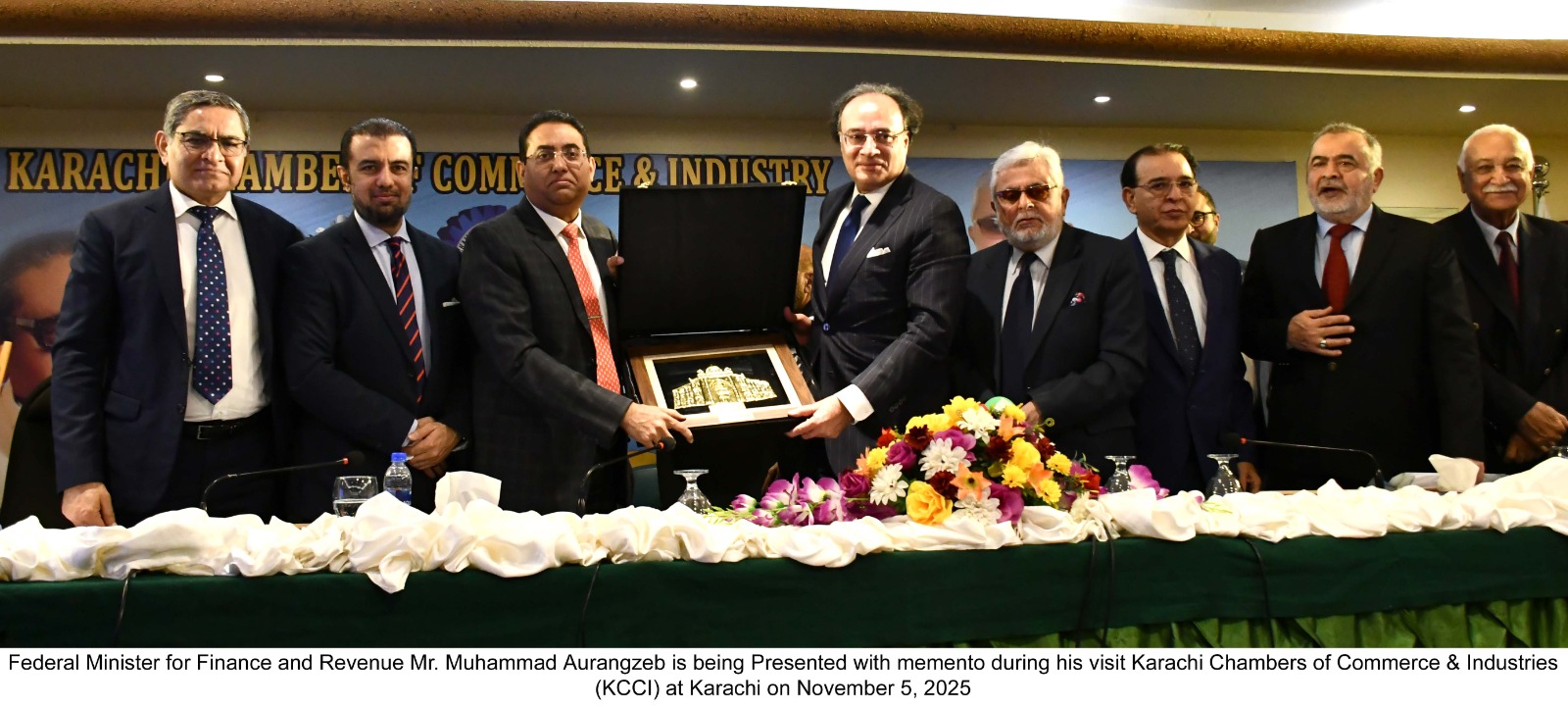 Responding to these issues, Mr. Aurangzeb said, “We have made Mr. Najeeb the DG of Taxation Policy, and now taxation policy will not be made by the FBR alone. It will be developed through a consultative process with all chambers, ensuring benefits for the private sector.” He added, “Procedural issues like the edit option and others will be immediately dealt with, especially for those who are making arbitrage profit by converting items from commercial to other sectors to avoid tariffs.”
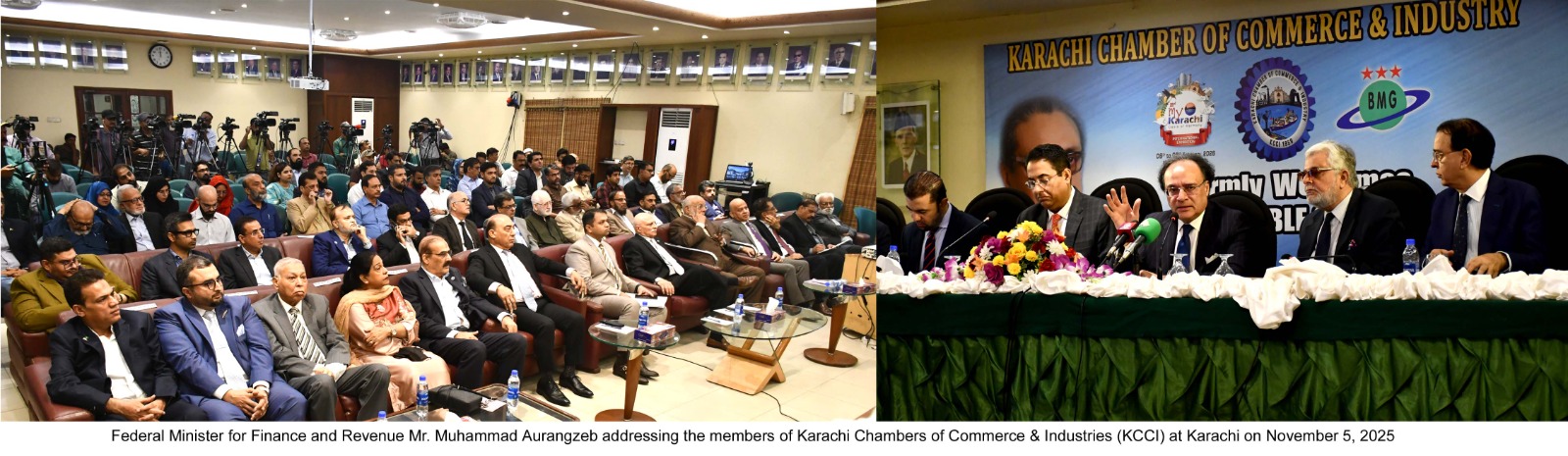 Addressing concerns about rising inflation, the Minister explained, “Inflation is primarily due to border restrictions affecting the prices of certain vegetables and crops, and also due to floods. However, this time we have covered crop losses through our own resources rather than repeatedly approaching international lenders.” He further mentioned that Pakistan recently made a $500 million Eurobond repayment without any external support, reflecting economic stability and fiscal discipline.
He appreciated the KCCI for presenting factual insights, stating, “I’m glad that KCCI has presented facts — this is very good for discussion. The Prime Minister’s foremost target is to empower the private sector, which is the largest employment generator in the country. For export growth, we are taking strict measures and ensuring that consultative processes with chambers are consistently held.”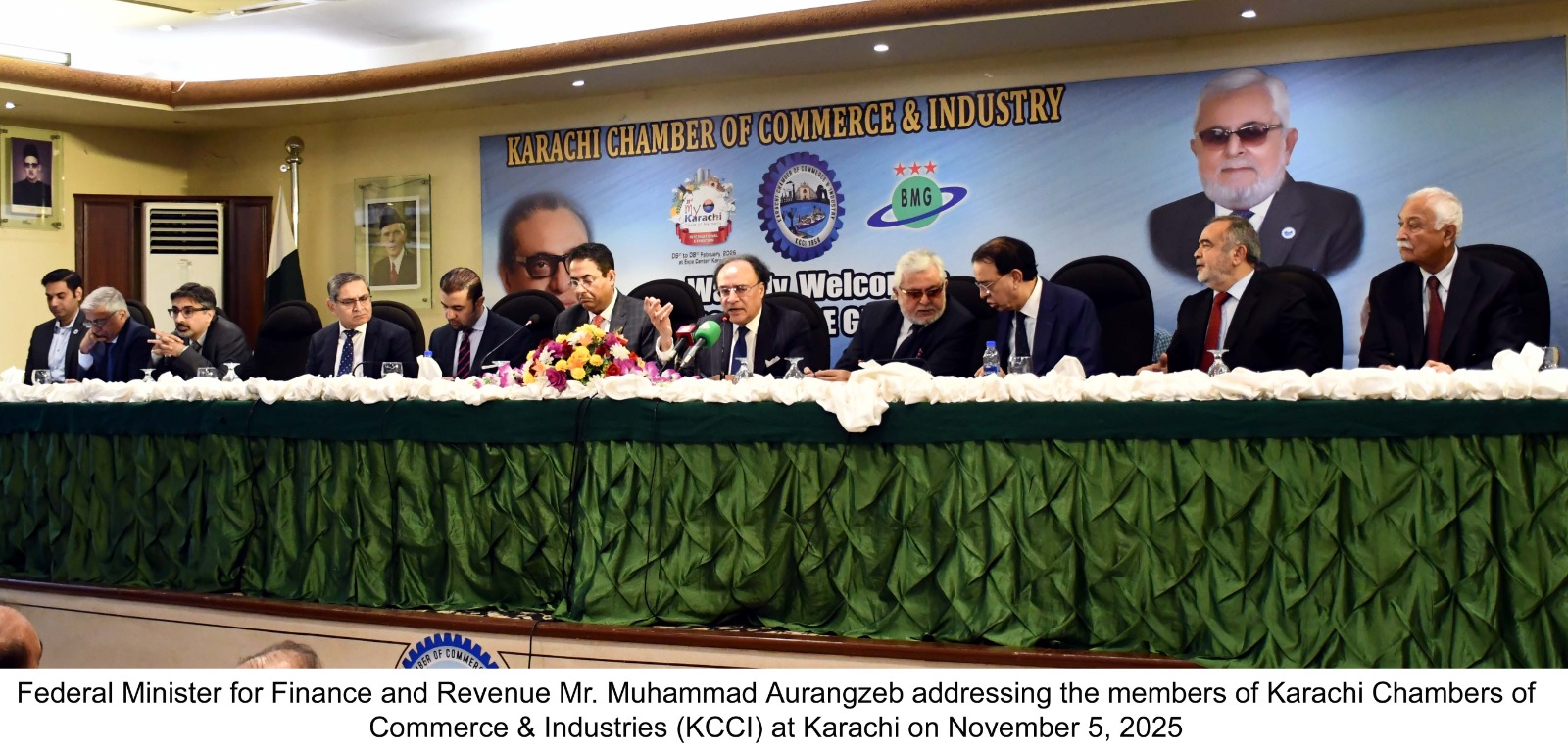
Highlighting the government’s reform agenda, Mr. Aurangzeb emphasized, “Our first motive is deregulation, and while you see companies exiting Pakistan, you must also note new entrants such as Aramco and BYD. The Prime Minister has formed eight consultative committees on different sectors, each headed by private sector members.”
During the interaction, President KCCI Zubair Motiwala raised concerns about high utility costs, noting that commercial industries in Pakistan are being charged around Rs. 3,500 per MMBTU for gas compared to Rs. 1,800 cost which is like 100% markup making it difficult to remain competitive. He urged the Minister to lower utility rates or cap additional charges to 5%. Mr. Aurangzeb agreed to review the matter and assured that the issue of circular debt and utility costs would be discussed at the federal level to find a sustainable solution.
The meeting concluded on a positive note with both sides agreeing to maintain regular coordination and strengthen public-private partnership for sustainable economic growth