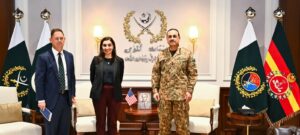
Pakistan-Saudi pact to unlock $50bn opportunities.

ISLAMABAD (Sept 19)Pakistan and Saudi Arabia signed the Strategic Mutual Defence Agreement on Wednesday, with both nations declaring that any aggression against either country will be considered aggression against both, marking a watershed moment that prominent business leader Omar Butt describes as “the foundation for unprecedented economic integration between our nations.”
The security agreement positions Pakistan to capture a larger share of Saudi Arabia’s Vision 2030 infrastructure spending. Building on what Crown Prince Mohammed bin Salman and Prime Minister Shehbaz Sharif described as “a historic partnership extending for nearly eight decades, he added.
Speaking to the business community, Omar Butt, President of Pakistan Business Network, said that the formalized defense ties create the trust framework needed for significant commercial partnerships, in which Field Marshal Asim Munir has played a historic role in the national interest. The pact arrives as Arab states grow increasingly wary of US security guarantees, creating space for Pakistan’s nuclear deterrent to supplement Saudi regional security calculations.
Mr. Butt sees immediate opportunities in defense manufacturing, cybersecurity systems, and dual-use technologies where Pakistani firms can partner with Saudi counterparts on joint development projects. The agreement, signed at Al-Yamamah Palace with full royal protocol including F-15 fighter jet escort and horse-mounted guard ceremonies, expands defense cooperation to include comprehensive military means across training, exercises, and intelligence sharing.
Pakistani defense contractors are already positioning for contracts in radar systems, surveillance technology, and border security infrastructure as Saudi Arabia modernizes its military capabilities. Omar Butt expects the strategic partnership to accelerate Pakistani participation in NEOM and other megaprojects under Saudi Vision 2030. The kingdom’s $500 billion commitment to new cities and industrial zones creates opportunities for Pakistani construction firms, engineering consultancies, and specialized manufacturers that are currently facing domestic market constraints.
The timing coincides with Pakistan’s ongoing economic stabilization under its IMF program, where Riyadh has been a significant source of financial aid and oil supplies. Army Chief Field Marshal Syed Asim Munir played a key role in the agreement’s success, signaling military institutional support for deeper Saudi commercial engagement.
He noted that enhanced security cooperation strengthens the foundation for expanded energy partnerships, potentially including Pakistani involvement in Saudi renewable energy initiatives and petrochemical joint ventures. This also creates opportunities for Pakistani firms in sectors previously dominated by Western contractors, particularly in security systems, communications infrastructure, and industrial technology.
However, the partnership carries implementation risks. Pakistan’s regulatory capacity remains limited, and previous Saudi commitments have faced delays due to bureaucratic inefficiencies and policy reversals. The CPEC experience demonstrates how security concerns can complicate major projects.
Omar Butt noted that the alliance signals that Saudi Arabia has alternative anchors of deterrence, reshaping regional investment flows and supply chain calculations. Pakistani exporters in textiles, pharmaceuticals, and agricultural products expect preferential access to Saudi markets as economic integration deepens alongside security cooperation.
The defense pact’s success will ultimately depend on translating strategic alignment into measurable commercial outcomes. Early indicators include joint military procurement agreements, technology transfer arrangements, and coordinated responses to regional security challenges that create business opportunities for firms in both countries.
For Pakistan’s business community, the Saudi defense partnership represents the most significant strategic realignment since CPEC, with the potential to diversify economic dependencies and access Gulf capital markets previously complex to penetrate without formal security guarantees. If effectively implemented, Pakistan could gain new opportunities in other Gulf Cooperation Council countries as well.