Rubio, Vance, Ossoff and Buttigieg Emerge as Early 2028 Presidential Contenders
Reuters/Ipsos poll highlights voter interest in four potential candidates as both parties weigh their political direction after the midterm elections
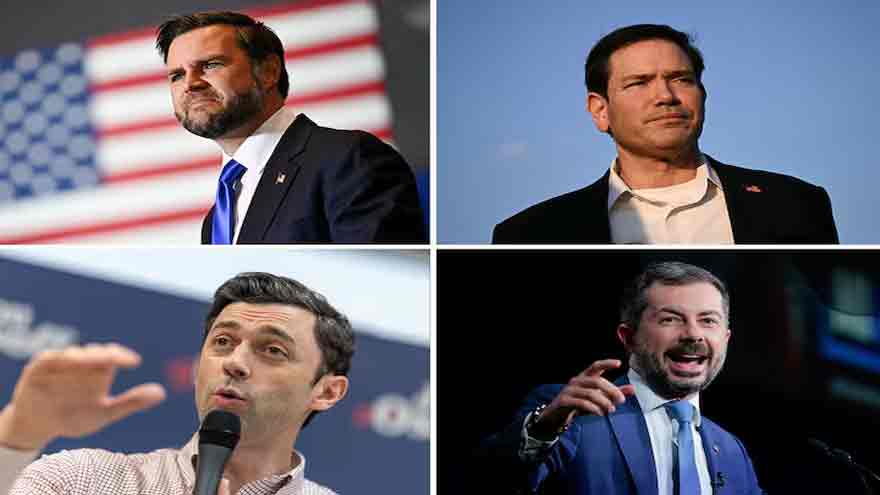
2028 Election: Marco Rubio, JD Vance, Jon Ossoff and Pete Buttigieg draw early voter attention.
Four potential contenders have emerged in early discussions about the 2028 US presidential election. A new Reuters/Ipsos poll identifies Republicans JD Vance and Marco Rubio, alongside Democrats Jon Ossoff and Pete Buttigieg, as candidates attracting voter attention.
However, none has formally announced a presidential campaign. The parties’ nomination contests remain more than a year away. Therefore, new candidates could enter the race, while voters’ preferences may change.
Among Republican voters surveyed, 45% rated Secretary of State Marco Rubio an “excellent” presidential candidate. Meanwhile, 43% gave the same rating to Vice President JD Vance.
On the Democratic side, 29% rated former transportation secretary Pete Buttigieg an excellent candidate. The same share gave that rating to Georgia Senator Jon Ossoff.
The poll surveyed 1,705 US adults nationwide. It included roughly 500 registered voters from each party and concluded on Monday. The margin of error was five percentage points for Republican and Democratic voters.
Trump Remains Central to the 2028 Debate
President Donald Trump continues to influence the political debate within both parties. His approval rating has fallen close to the lowest levels of his presidency, according to the report.
Republicans remain divided over whether their next presidential candidate should distance himself from Trump or continue his political approach.
128km Lillah-Jhelum Road Completed After Five Years at Rs13.5bn Cost
Democrats, meanwhile, are debating how aggressively to challenge the president. Their discussions include whether to pursue impeachment following their strong performance in the November 3 congressional elections.
Trump has asked political allies whether they prefer Vance or Rubio. However, during a Sunday interview with CBS’s 60 Minutes, he said he would “not necessarily” endorse a candidate in the Republican primary.
Rubio Gains Support Among Some Trump Voters
Florida attorney Barbara Rezner, who voted for Trump in the last three presidential elections, said she preferred Rubio over Vance.
She considers Vance too far to the right and too closely aligned with Trump. By contrast, she said Rubio had maintained a lower public profile while performing his duties.
“Rubio has managed to do his job. He’s stayed off most people’s radar because he hasn’t done anything too far left, too far right, too crazy,” Rezner said.
Dissatisfaction with Trump among some Republicans has centred on his decision to launch a war against Iran. The conflict has contributed to higher fuel prices.
Rubio has remained largely absent from several unsuccessful peace talks with Iran, despite serving as the country’s top diplomat. Vance has also shown signs of distancing himself from the conflict.
He publicly linked Republican losses in the midterm elections to the war with Iran.
Other Republicans are also attracting attention as possible 2028 contenders. Florida Governor Ron DeSantis received an excellent rating from 32% of Republican voters.
Trump’s son, Donald Trump Jr., and Texas Senator Ted Cruz also have supporters. However, both face considerable opposition within the party.
Ossoff and Buttigieg Lead Democratic Interest
Ossoff has attracted attention through his direct criticism of Trump. He has described the president as corrupt and unfit for office.
Furthermore, Ossoff won his re-election race in Georgia by 18 percentage points. Trump had carried the state by two points in the 2024 presidential election.
Buttigieg also received an excellent rating from 29% of Democratic voters. He brings greater national recognition after running for president in 2020.
The poll found that about one in five Democrats had never heard of Buttigieg. By comparison, roughly one in three said they did not know Ossoff.
Name recognition could give established candidates an early advantage. They may spend less money introducing themselves to voters. Nevertheless, political history includes several examples of relatively unknown candidates gaining momentum during election campaigns.
Democratic Voters Also Consider Other Candidates
Both Buttigieg and Ossoff are generally viewed as moderate Democrats. That positioning appeals to voters who prefer gradual policy changes over major shifts.
Ed Blair, a retired farmer from southern Illinois, said he favoured Buttigieg partly because he knew less about Ossoff.
Blair also expressed concern about expanding federal Medicare coverage from senior citizens to the entire population. Instead, he favoured smaller changes, such as extending coverage to children.
“I do favor the more moderate candidates over the more progressive ones,” he said.
Other established Democrats also received notable ratings. Former Vice President Kamala Harris and California Governor Gavin Newsom each received excellent ratings from 23% of Democratic voters.
By contrast, 15% gave that rating to Representative Alexandria Ocasio-Cortez, a prominent progressive voice.
The candidates also differ over how to respond to Trump. Ocasio-Cortez said after the midterms that impeachment should remain an option.
Buttigieg, however, told The New Yorker that he was “not very interested” in impeachment.
Strategists Urge Caution Over Early Poll Results
Democratic strategist Elaine Kamarck cautioned against reading too much into voter preferences so far ahead of the election.
She noted that several potential candidates have yet to decide whether they will run. Moreover, the political landscape could change considerably before the nomination contests begin.
“It’s a world away,” Kamarck said. “There are lots of people in both parties who are still deciding if they are going to run. You might be able to predict who will run, but you certainly don’t know anything about who is going to be ahead.”
The poll offers an early indication of voter interest. However, the 2028 presidential race remains open, with both parties still weighing their choices.